
Articles
International trends in BIM review: Comparative analysis and strategies for implementation
Product
Career
Automatically translated from the Japanese original.
BIM-based review is being adopted in countries around the world, but progress varies considerably from one country to the next, depending on factors such as government support, industry structure, and the interoperability of BIM-related data. Drawing on recent academic papers and government publications, this article surveys international trends in BIM-based review and outlines the challenges to adoption along with potential solutions.
Benefits and Drawbacks of Adopting BIM-Based Review
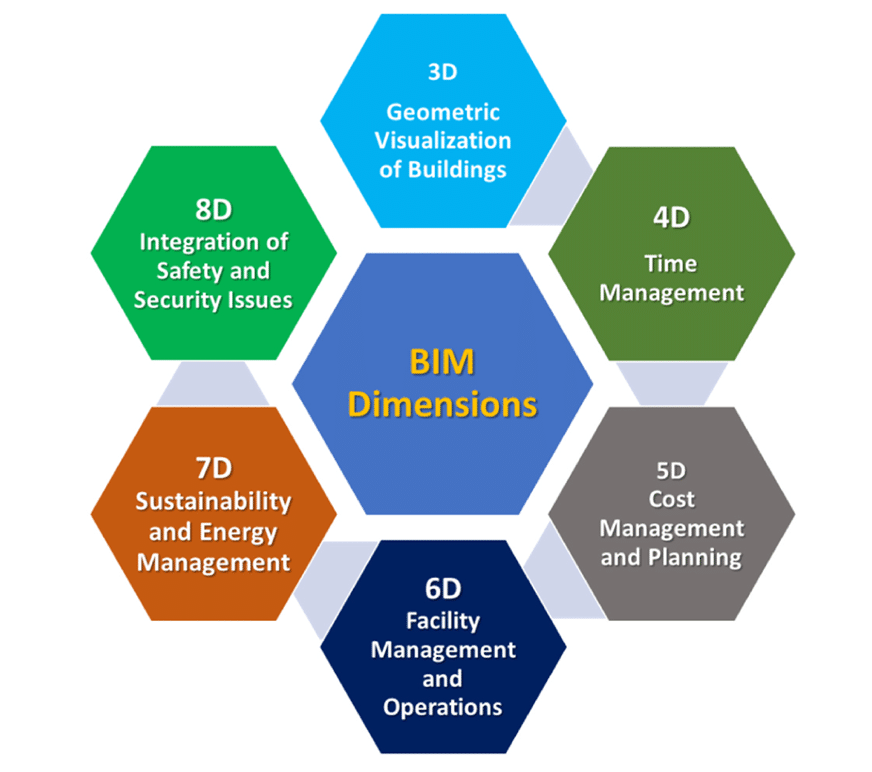
Building Information Modeling (BIM) is a technology and methodology in which a 3D model of a building is constructed on a computer, complete with attribute data such as materials, cost, and performance, so that information can be managed centrally and consistently from design through construction to operation and maintenance. Applying BIM to building confirmation (Japan's statutory pre-construction review of building plans) and review—that is, BIM-based review and automated code checking—offers major benefits, such as a more efficient and more transparent review process. At the same time, it faces technical, financial, and organizational barriers that constitute its drawbacks.
Benefits of adopting BIM-based review
Faster, more efficient review
Manual review based on conventional 2D drawings or PDFs is time-consuming, but introducing an automated BIM-based review system can dramatically shorten the time required for checks. Tasks that once took hours—verifying that a staircase meets the relevant standards, for example—can be completed in seconds. One innovative program has even set the goal of cutting review time "from 60 days to 60 seconds" (Messaoudi & Nawari, 2021). The result is a dramatic improvement in turnaround times for processing and approving applications (Reinhardt & Mathews, 2017).
Greater objectivity and accuracy in review
Manual review is prone to error, and it suffers from inconsistencies arising from the subjective judgments and differing interpretations of individual reviewers. With automated checking of BIM models, the computer performs verification according to predefined rules, eliminating human error and enabling objective, consistent review (Altıntaş & İlal, 2022; Noardo et al., 2020; Reinhardt & Mathews, 2017).
Greater process transparency and smoother communication
Using an online BIM e-submission system makes the review process more transparent. Because information is shared through a single 3D model, it also becomes easier for stakeholders—government authorities, designers, external approval bodies, and others—to exchange information, improving communication and coordination (Abdalla et al., 2023; Bloch & Fauth, 2023; Brito et al., 2022).
Data reuse and integration into city models (smart cities)
In conventional review, drawing data has typically gone unused—and been lost—once a project is complete. When review is conducted with BIM, however, the detailed, approved BIM data can be integrated into 3D city models such as GIS (geographic information systems), allowing urban data to be updated automatically (the GeoBIM approach). This promotes data reuse across the entire lifecycle, from maintenance management to disaster simulation (Noardo et al., 2020; Yılmaz & Dikbaş, 2025).
Drawbacks and challenges of adopting BIM-based review
The difficulty of making regulations machine-readable
Automated review requires converting complex building codes and regulations written in natural language into logical rules that a computer can process—in other words, a machine-readable format. Regulations, however, are full of ambiguous wording and exceptions, and translating them accurately into a programming language is extremely difficult. In Singapore's case, the rules were so complex that implementing the automation rules reportedly consumed as much as 30% of the total project time (Brito et al., 2022; Reinhardt & Mathews, 2017; Yılmaz & Dikbaş, 2025).
High upfront investment and learning costs
Migrating to a BIM-based review system requires substantial upfront spending on new software and hardware and on building the system itself. On top of that, reviewers and applicants who have always worked with 2D drawings must be educated and trained to use BIM tools, and the resulting burden in time and cost is a major barrier (drawback) for organizations (Criminale & Langar, n.d.; Messaoudi & Nawari, 2021; Ullah et al., 2019).
Data standardization and interoperability issues
When applicants use different BIM software, interoperability—the ability to exchange data correctly with the review system—becomes a challenge. Submission in the international standard IFC format is recommended, but information can be lost or distorted when files are converted between software packages. In addition, for automated review to function, designers must accurately enter the specific attribute information required for review into the model in advance, which adds to the modeling burden (Bloch & Fauth, 2023; Peng & Liu, 2023; Volk et al., 2014).
Legal liability and organizational resistance
Another drawback is the industry's low acceptance of new systems, with strong cultural resistance from practitioners accustomed to conventional 2D-based processes. Moreover, in a collaborative BIM environment, legal questions become more complicated: who is responsible for which data inputs, and who owns the data? A further risk has been pointed out: if reliance is placed on a system's built-in automated checks and a flaw in the program causes a code violation to be missed, it is unclear who bears legal liability—the software developer, the review body, or the designer (Criminale & Langar, n.d.; McAdam, 2010; Sun & Kim, 2026; Ullah et al., 2019).
Phases in the Development of BIM-Based Review
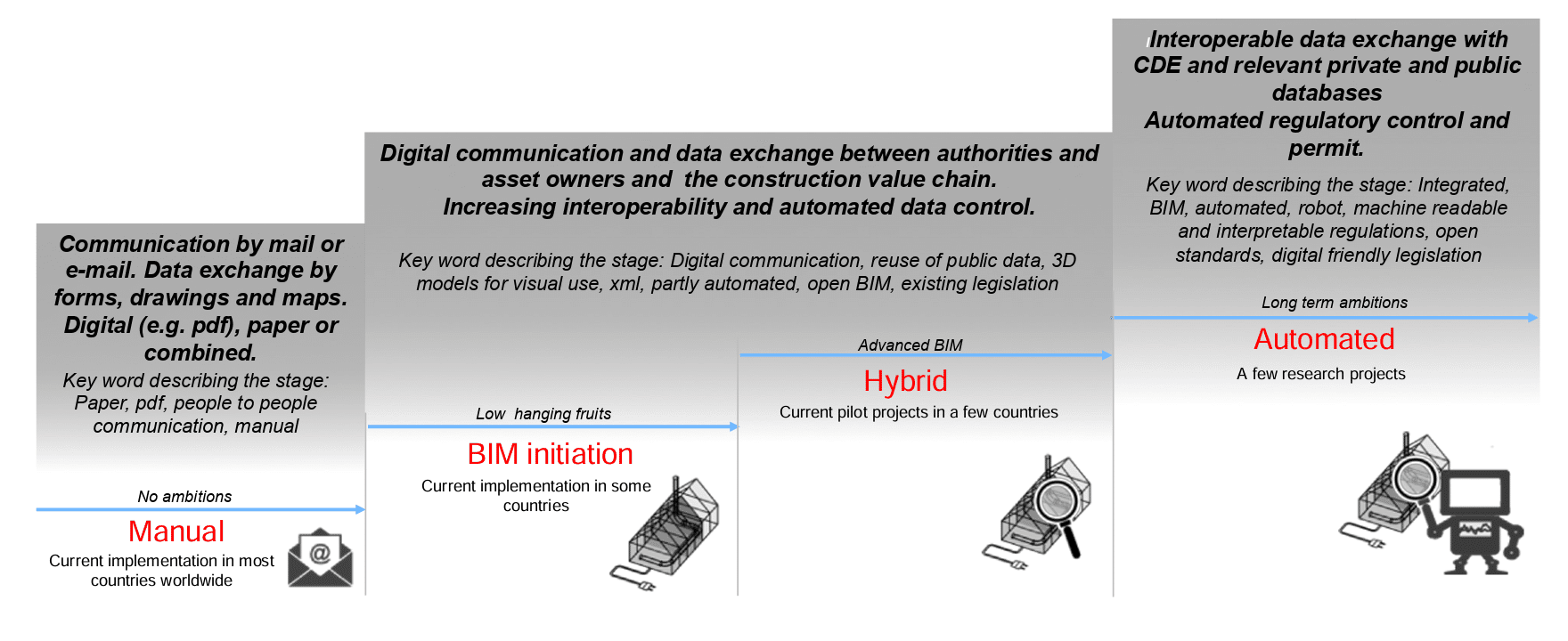
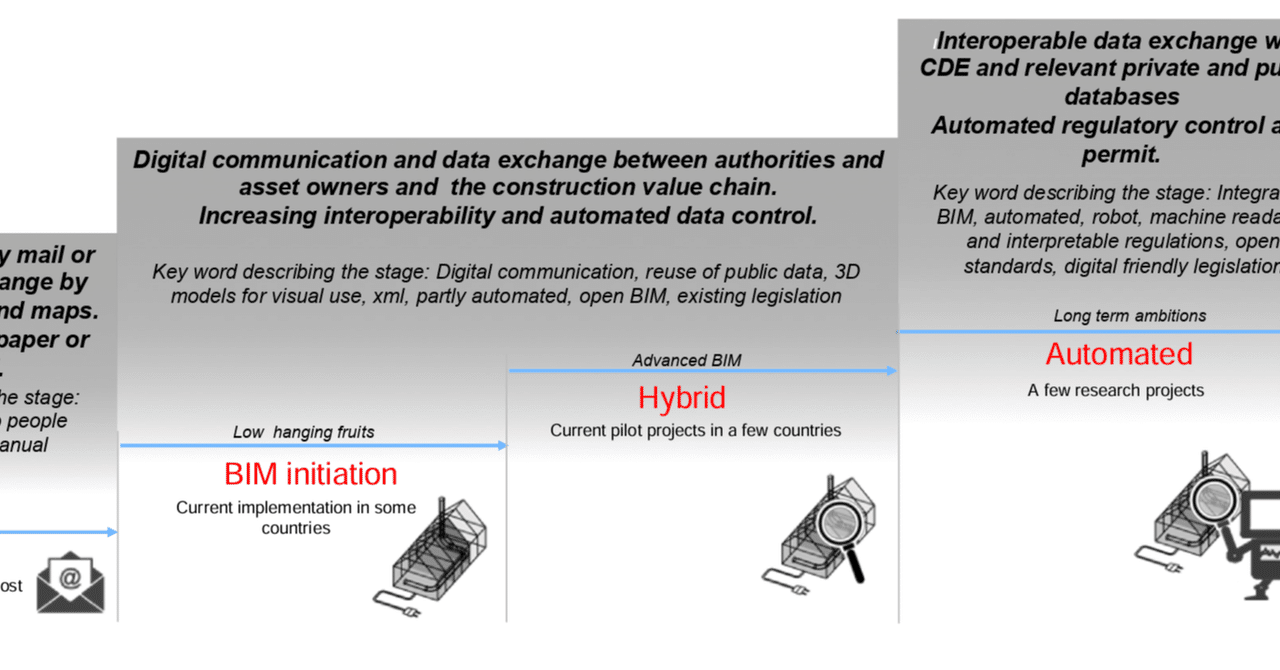
The international standards body buildingSMART International (bSI), along with a number of academic studies, has defined the development of BIM-based building confirmation and review in terms of four main levels, based on technological maturity and degree of automation.
These phases chart the transition from manual drawing checks to fully automated code checking and are defined as the following four levels (Level 0 through Level 3) (Brito et al., 2022; Muto, 2020; Shahi et al., 2019).
Level 0: Manual / Paperless
At this stage, submissions have moved from conventional paper-based applications to online submission of electronic files such as PDFs (2D drawings). The review itself is still performed manually by humans; only document management and the workflow have been digitized.
Level 1: BIM Initiation / Visualization
At this stage, BIM models begin to be submitted as part of electronic applications. The emphasis is on the 3D visualization capabilities of BIM models rather than on their data attributes. Reviewers consult the BIM model to understand complex geometry and to check consistency with the 2D drawings, but no automated checking takes place.
Level 2: Hybrid / Information Flow
This is an intermediate stage in which manual human review coexists with automated system checks. The attribute data in BIM models is actively used to check specific regulatory requirements automatically—such as the presence or absence of a target element, numerical values, and spatial or geometric relationships. To enable partial automation by the system, rules for information exchange (IDMs and MVDs) begin to be defined.
Level 3: Automated
At this stage, the system's AI or rule engine performs comprehensive automated code-compliance checking, and manual processes are eliminated from review entirely. Achieving this requires that natural-language building regulations be converted into machine-readable law (e-Law) and that the system autonomously support decision-making through software-independent open standards such as IFC.
Status of BIM-Based Review Adoption by Country
The adoption of BIM-based review—the digitization of building confirmation and permitting, together with automated code checking—varies widely: some countries are driving it forcefully at the national level, while others remain at the pilot stage within individual local governments. In recent years, the trend has been a shift from the simple submission of 3D models toward advanced systems that integrate artificial intelligence (AI) and automated code checking (ACC).
The specific state of adoption in the major countries is as follows.
Asia
Singapore (Sun & Kim, 2026)
Singapore was the first in the world to launch an electronic submission system, CORENET, in 1995, and began accepting architectural BIM models in 2010. Since 2015, BIM-based submission has been mandatory for all new construction projects exceeding 5,000 square meters. The country is now migrating to CORENET X, a new platform that consolidates the approval processes of seven regulatory agencies, with mandatory use for new projects scheduled to begin in April 2025.
South Korea(Sun & Kim, 2026)
Korea developed its building administration system, SEUMTER, in 2009 and rolled it out nationwide in 2011. By 2016, BIM adoption had become mandatory for all public facility projects. From 2013 to 2021, the government pursued the KBIM e-submission project to establish a BIM-based building confirmation application process. Building on this, it launched the "AI-based Architectural Design Automation Technology Development" project, running from 2021 to 2025, which aims to use AI to boost design productivity and support administrative services.
China(Sun & Kim, 2026)
Since 2018, China has run pilot programs in 16 provinces and cities (including Beijing, Shanghai, Guangzhou, and Shenzhen) with the goal of cutting the approval process for construction projects from an average of 200 days to 120. Each region has introduced its own BIM review system: Hunan Province launched a digital review system using the XDB format in 2020, Shenzhen began operating in 2022 with SZ-IFC, a localized version of the international IFC standard, and Shanghai introduced AI-assisted review based on the EDM/SDM format in 2024. In March 2024, the Ministry of Housing and Urban-Rural Development (MOHURD) completed research and development of an AI-powered drawing recognition and review system.
In 2010, the Ministry of Land, Infrastructure, Transport and Tourism (MLIT) launched BIM pilot projects for government building construction. As a trial for building confirmation applications (Japan's statutory pre-construction review of building plans), initiatives involving the Building Research Institute and other bodies have explored submitting and using BIM model data in place of conventional PDF drawings, with the aim of eliminating inconsistencies between drawings.
For BIM use in Japan's building confirmation process, BIM-based drawing review is scheduled to start nationwide in April 2026. Applicants will upload their data to a CDE dedicated to building confirmation applications, named ArchSync, where the review will take place.
Hong Kong(Cheng & Lu, 2015)
The Housing Authority (HA) set a target of applying BIM to all new projects by 2014 and has played a leading role by developing its own BIM standards and guidelines.
Taiwan(Cheng & Lu, 2015)
Although the central government has not yet legally mandated BIM, it is being used on large-scale projects such as the Taipei MRT and sports centers. Institutions such as National Taiwan University (NTU) have developed guidelines to encourage wider adoption.
Middle East
UAE(Abdalla et al., 2023; Brito et al., 2022)
Dubai Municipality has mandated BIM use for projects above a certain size since 2013. A platform known as Dubai BIM e-Submission was developed, enabling the electronic submission of BIM projects with a partially automated code compliance checking mechanism.
Saudi Arabia(Al-Hammadi & Tian, 2020)
There is no national government BIM mandate yet, and adoption remains at an early stage. A lack of demand from owners (clients) and a shortage of BIM specialists are major barriers to wider uptake.
Europe
United Kingdom(Sun & Kim, 2026)
The UK established its online application portal, the Planning Portal, in 2002, and in 2016 made Level 2 BIM mandatory for all public sector projects. It has also set up the D-COM Network, a network of academia and industry, with the goal of bringing automated code checking to large-scale industrial deployment by 2025.
Norway(Sun & Kim, 2026)
Statsbygg, the public-sector client, has mandated BIM for public construction projects since 2010 and has developed its own set of requirements, SIMBA. The ByggSøk system, introduced in 2003, was retired in 2020 and has been superseded by more advanced services: eByggesøk for private individuals and eByggesøk Proff for professionals.
Finland(Brito et al., 2022; Cheng & Lu, 2015)
As early as 2007, Senate Properties, the state-owned real estate management agency, mandated the use of IFC/BIM in public projects. Today, an online permitting platform called Lupapiste is in operation, and municipalities such as Hyvinkää, Järvenpää, and Vantaa have implemented submissions using BIM data.
Netherlands(Cheng & Lu, 2015; Noardo et al., 2020)
In 2011, the government buildings agency (Rgd) mandated BIM for projects above a specified size. Municipalities such as Rotterdam and The Hague are working to automate building permit checks using GeoBIM (the integration of BIM and GIS) information, and Rotterdam has even tested a procedure for issuing permits within a single day.
Sweden(Brito et al., 2022; Cheng & Lu, 2015)
The Swedish Transport Administration has used BIM on its investment projects since 2015. A pilot implementation was carried out to automatically check building permit regulations on building height and building footprint by integrating BIM with geospatial data.
Estonia(Ullah et al., 2020)
The capital, Tallinn, is transitioning to a BIM-based building permit process. In collaboration with the Ministry of Economic Affairs and Communications, it has developed and piloted an automated checking system (as a proof of concept) built on open standards such as IFC and CityGML.
France(Noardo et al., 2020)
The national geographic institute (IGN) is developing SimPLU, a tool that uses BIM and GIS data to automatically verify urban planning constraints in building permits, such as height limits, setbacks from roads, and shadow impacts.
Switzerland(Brito et al., 2022)
Switzerland: In Geneva, a prototype implementation of BIM-based electronic submission is under way within the city's digital platform, AC Demat.
Italy(Muto, 2020)
Milan is trialing pre-checks using a commercially available model checker. Rules are embedded in advance so that applicants can verify compliance themselves before sharing the results with the review authority.
North America
United States(Sun & Kim, 2026)
The General Services Administration (GSA) has mandated BIM since 2007, and some states, including Wisconsin, also require BIM on public projects. There is, however, no unified nationwide submission platform. Individual municipalities such as New York City (with its Development Hub) run their own electronic submission systems, but most still revolve around the submission of 2D drawings and PDFs. New York City accepts safety plans submitted in BIM, but automated checking has not been implemented. Past efforts to develop automated checking platforms such as SMARTcodes and AutoCodes were made, though some were discontinued due to funding shortfalls and other issues. Today, the National Institute of Building Sciences (NIBS) is leading a new program (NBP) to research model-based permitting approaches.
Canada(Brito et al., 2022)
In Ontario, the "One Ontario" initiative is working to build a unified framework for data exchange, with the goal of reducing the cost of customizing for approval processes that currently differ from one municipality to the next.
Latin America
Chile(Brito et al., 2022)
Chile operates a national platform for electronic services called "DOM en línea," and development is under way to automate BIM-based building permitting on top of it.
Brazil(Brito et al., 2022)
Several municipalities are running pilot implementations and case studies of digital building permit systems and automated code checking that combine BIM with GIS.
Oceania
Australia(Sun & Kim, 2026)
Australia has no strong BIM mandate at the federal level, but adoption is advancing state by state and project by project—for example in Queensland (where BIM is mandatory on government projects worth AUD 50 million or more) and New South Wales. In Victoria, the "eComply" project, part of Digital Twin Victoria, is developing automated compliance checks against the regulations for small-scale housing, and a commercial solution, "Archistar Apply," became available in 2023. New South Wales (NSW) likewise launched an AI-based solution in November 2023 to streamline its development application process.
Where Each Country Stands
Construction and government bodies around the world are moving through the phases described above on their way to digitalization, but the pace of progress varies considerably from place to place(Brito et al., 2022; Muto, 2020).
Countries and regions at "Level 0" to "Level 1" (the mainstream)
Most countries and municipalities today—including New York and Boston in the United States, parts of Canada, and Finland—fall into this category. Online e-submission platforms are widespread, but most of them operate at Level 0 or Level 1, relying on PDFs and 2D drawings. Reviewers are often unfamiliar with the newer technologies, and BIM is being introduced in a supporting role as the "low-hanging fruit" of digitizing the application process.
Countries and regions reaching or transitioning to "Level 2" (the frontrunners)
A small number of countries with strong, state-led BIM programs—Singapore, South Korea and Norway among them—are moving into Level 2. Singapore is the standout pioneer: through its CORENET system it has made BIM submission mandatory for large projects and has put a limited degree of automated code compliance checking into practical use. Municipalities in emerging economies such as Brazil have also been reported to be developing systems with the near-term aim of leaping directly from Level 0 to this Level 2 (partial automation).
"Level 3" (a long-term goal still in the research phase)
No country or municipality has yet put Level 3 full automation into practice to the point of eliminating human approval. Technical and institutional hurdles remain high—ambiguity in how regulations are interpreted, incomplete data in BIM models, and interoperability barriers—so reaching this stage will require "long-term ambitions." At present, initiatives such as the UK's D-COM network and research projects applying AI and machine learning are still at the stage of testing the foundational technologies for Level 3, including digital compliance ecosystems and semantic modeling.
Challenges in Adopting BIM-Based Review, and How to Overcome Them
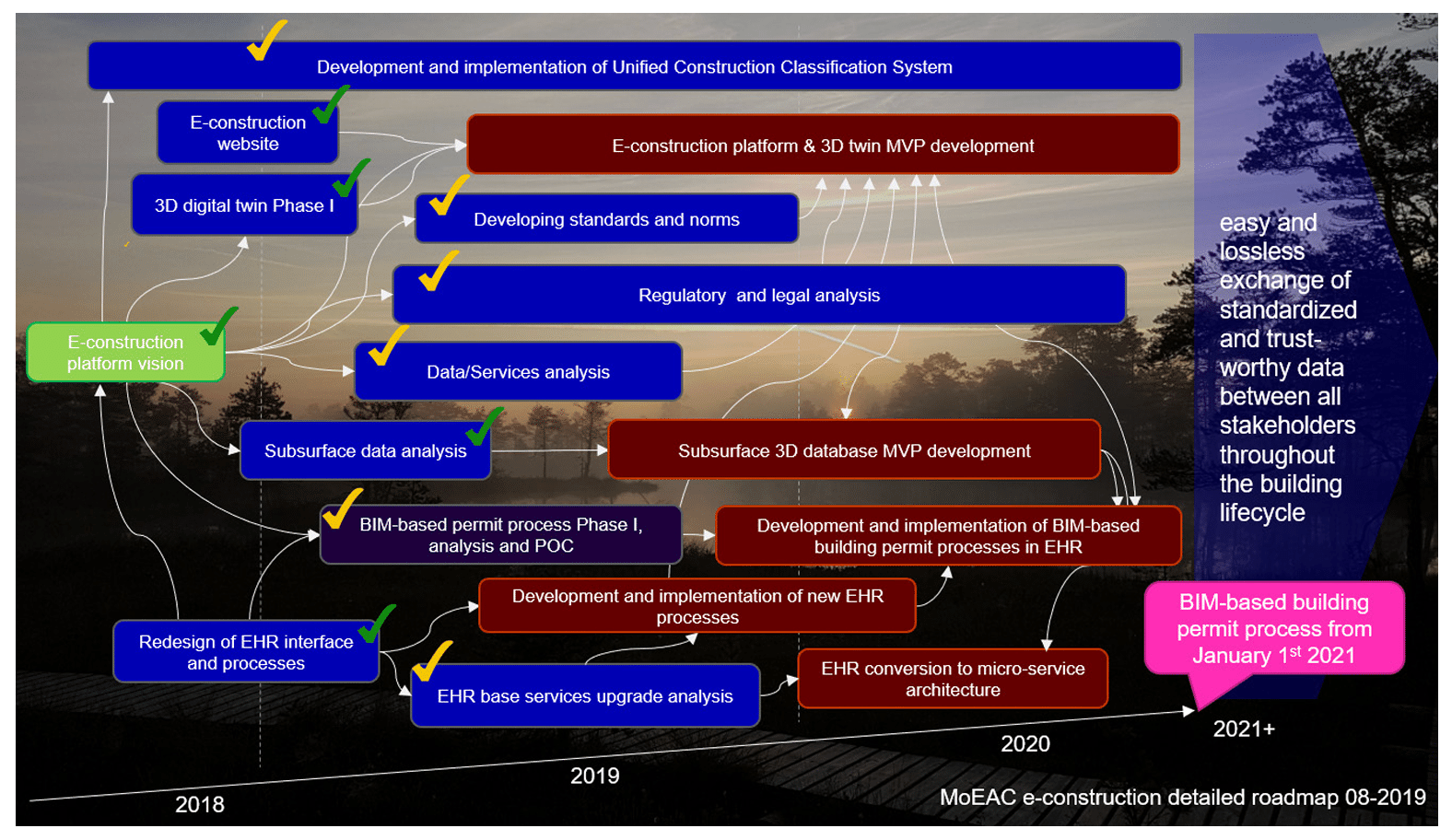
Adopting BIM-based review (a BIM-based building e-permit system) in any country raises a range of challenges spanning technology, process and legal frameworks, and organizational and human factors. Below we outline these challenges together with the solutions for overcoming them.
Key challenges in adopting BIM-based review
The challenges of adopting BIM-based review fall into three main categories: technical and data-related, institutional and legal, and organizational and human.
Technical and data-related challenges
The difficulty of making regulations machine-readable(Bloch & Fauth, 2023; Brito et al., 2022; Yılmaz & Dikbaş, 2025)
Converting complex building codes and urban planning regulations written in natural language into logical rules that a computer can evaluate automatically (a machine-readable format) is extremely difficult. Regulations are full of ambiguous wording and exceptions, and this remains a major barrier to automation.
Lack of interoperability(Bloch & Fauth, 2023)
Information is lost when data is exchanged between different software packages, and BIM data is not yet effectively integrated with GIS (geographic information systems), which are needed to evaluate the surrounding environment.
Quality and completeness of model data(Bloch & Fauth, 2023)
Automated review requires that specific attribute information be entered accurately in the BIM model. In practice, however, models frequently lack the necessary information or contain modeling errors, so automated checks cannot function accurately on them as-is.
Institutional and legal challenges
Unclear legal liability(Biswas et al., 2024)
Because BIM by its nature involves multiple stakeholders collaborating on a single model, questions of data ownership and intellectual property remain unresolved—as does the question of who bears legal liability (the designer, the software developer, or the reviewing authority) if an automated review system misses an error.
Fragmented, siloed processes(Aljobaly et al., 2022)
In many government agencies, systems and procedures are siloed department by department, which stands in the way of building efficient workflows and introducing technical solutions.
Organizational and human challenges
Resistance to change and skills shortages
Cultural resistance runs deep among reviewers and industry professionals accustomed to conventional review based on 2D drawings. There is also a shortage of people with the specialist knowledge and skills needed to work with BIM and the new systems(Brito et al., 2022; Mastrolembo Ventura, 2025; Rana Matarneh, 2017).
High upfront investment
Deploying software and hardware and training staff demand substantial money and time, placing a heavy burden on small and medium-sized firms and municipalities in particular(Brito et al., 2022; Mastrolembo Ventura, 2025; Rana Matarneh, 2017).
Solutions for advancing adoption
Technical approaches
Integrating AI and natural language processing (NLP)(Sun & Kim, 2026)
Among the latest solutions, technologies are being developed that use AI (machine learning and large language models, or LLMs) together with natural language processing to convert complex regulatory text into rules automatically. Semantic enrichment—using AI to automatically fill in and correct information missing from BIM models—is another effective way to raise model quality.
Leveraging open standards(Sun & Kim, 2026; Yılmaz & Dikbaş, 2025)
Adopting vendor-neutral international data standards such as IFC and CityGML (the standard for city models) to improve interoperability between systems is essential.
Building an integrated common data environment (CDE)(Aljobaly et al., 2022)
By integrating the processes of individual departments and building a cloud-based common data environment (CDE) or e-submission platform—such as Singapore's CORENET X—agencies can break down information silos and deliver a highly transparent review process.
Policy and institutional approaches
Government-led mandates and phased rollout(Sun & Kim, 2026)
Widespread adoption of BIM-based review requires strong, top-down leadership from government. An effective approach is to mandate BIM submission in stages, starting with public projects.
Establishing Clear Guidelines and Standards (Sun & Kim, 2026; Yılmaz & Dikbaş, 2025)
Governments should develop unified, national-level BIM guidelines and standards—such as an Information Delivery Manual (IDM) and Model View Definitions (MVDs) that spell out exactly what information a model must contain—so that practitioners are not left guessing. Alignment with the international standard ISO 19650 is also regarded as essential.
Organizational and Workforce Development Approaches
Expanding Education and Training (Mastrolembo Ventura, 2025)
Staff at review bodies and designers across the industry need ongoing education and training programs covering BIM tools and the new processes that come with them, so that their digital skills can be steadily upskilled.
Financial Support and Incentives (Sun & Kim, 2026)
To lower the initial barriers to adoption for small and medium-sized firms and local governments, public-sector financial support and incentives—such as subsidies for software procurement and training, or tax breaks—are key to encouraging early uptake.
Closing Thoughts
In this article we have surveyed international trends in BIM-based review and laid out the challenges to its adoption along with potential solutions. Putting BIM-based review into practice means clearing a range of difficult hurdles, but once achieved, it promises substantial benefits not only for the construction industry but for society as a whole.
References
Criminale, A., & Langar, S. (n.d.). Challenges with BIM Implementation: A Review of Literature. researchgate.net. https://www.researchgate.net/profile/Sandeep-Langar/publication/317842173_Challenges_with_BIM_Implementation_A_Review_of_Literature/links/594db74caca27248ae3436c2/Challenges-with-BIM-Implementation-A-Review-of-Literature.pdf
Muto, M. (2020). E-submission common guidelines for introduce BIM to building process. https://www.buildingsmart.org/wp-content/uploads/2020/08/e-submission-guidelines-Published-Technical-Report-RR-2020-1015-TR.pdf
Rana Matarneh, S. H. (2017). Barriers to the adoption of building information modeling in the Jordanian building industry. Open Journal of Civil Engineering. https://www.academia.edu/download/122670204/12daa4cebfef240e308d6562c4b58fb6e1e8.pdf
Reinhardt, J., & Mathews, M. (2017). The automation of BIM for compliance checking: a visual programming approach. https://arrow.tudublin.ie/bescharcon/29/
The end
Read next ↓