
Articles
A Brief History of Cities and Buildings: How Technology Has Shaped Our Built Environment
Product
Career
Automatically translated from the Japanese original.
Introduction
As globalization and the sharing of knowledge through social media accelerate, so does the development of new technologies such as generative AI, construction 3D printers, and drones.
In this article, we look back at how cities and buildings have changed over history, and trace how technology has shaped them along the way.
We hope this overview offers a useful starting point for thinking about how the technologies emerging today might be put to use in human society, in our cities, and in our buildings.
Before the emergence of humankind (prior to 8 million years ago)
Living things evolved in response to their environments, giving rise to a vast diversity of species.
The lineage leading to modern humans (Homo sapiens) is thought to have diverged from that of chimpanzees roughly 8 million years ago. (Diogo et al., 2017)
Humans are not alone in building places to live: nest-building is common across many other species as well.
A nest shields life from predators and the outside environment, serving the specialized functions of survival and reproduction. These are the very same functions served by the houses and structures that humans build.


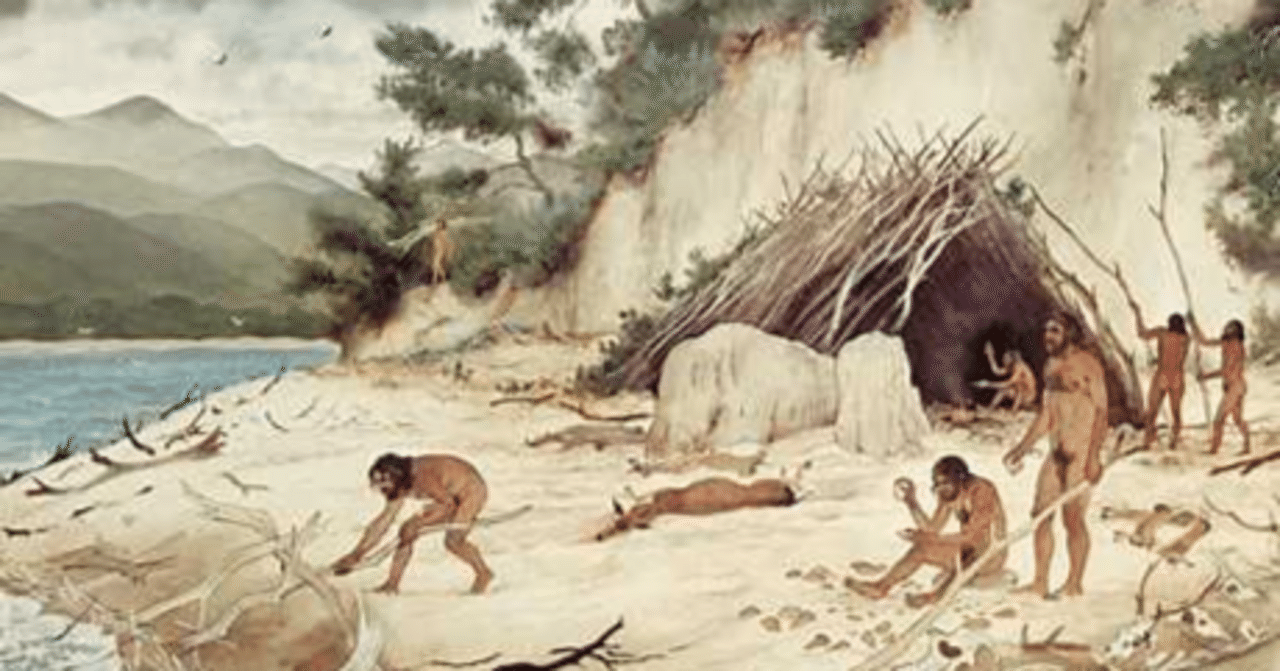
The invention of tools and language: the hunter-gatherer era (8 million BC – 10,000 BC)
With the use of tools and the ability to communicate in complex ways through language, humans began living in larger groups.
They lived by hunting animals, catching fish, and gathering nuts, shellfish, and other foods.
The invention of farming and herding: the agricultural and pastoral era (from 10,000 BC onward)
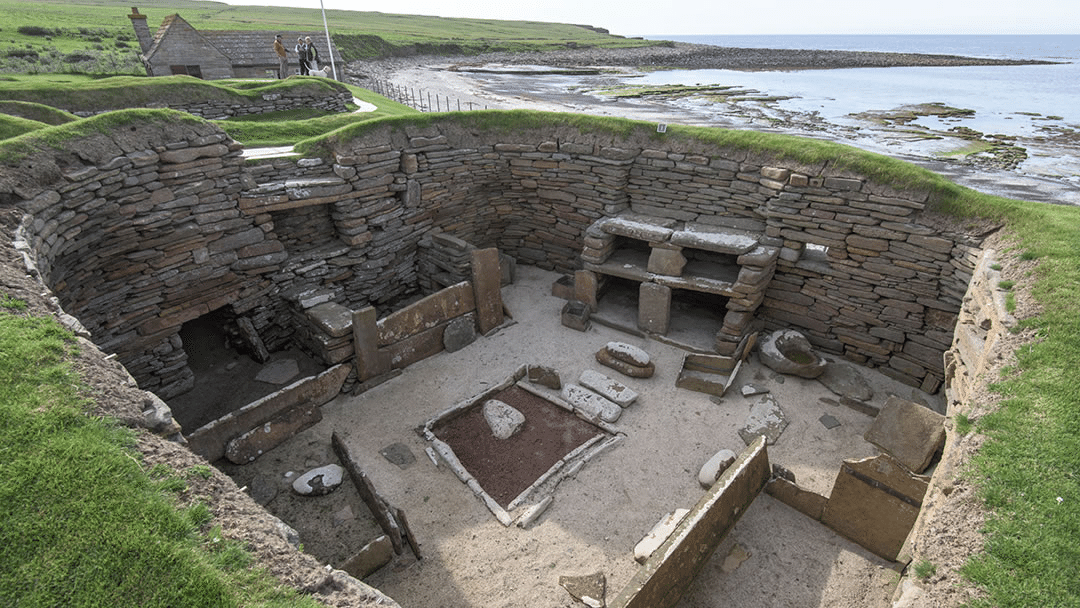
Humans invented technologies for producing their own food: agriculture and animal husbandry.
As agriculture developed, people were able to cultivate vegetables, grains, fruits, and other plants, securing a steady food supply.
Livestock such as cattle, sheep, and goats were raised for their milk and meat.
Life came to depend on farming and herding, and settled living became the norm.
The four great river civilizations (3000 BC – 2000 BC)
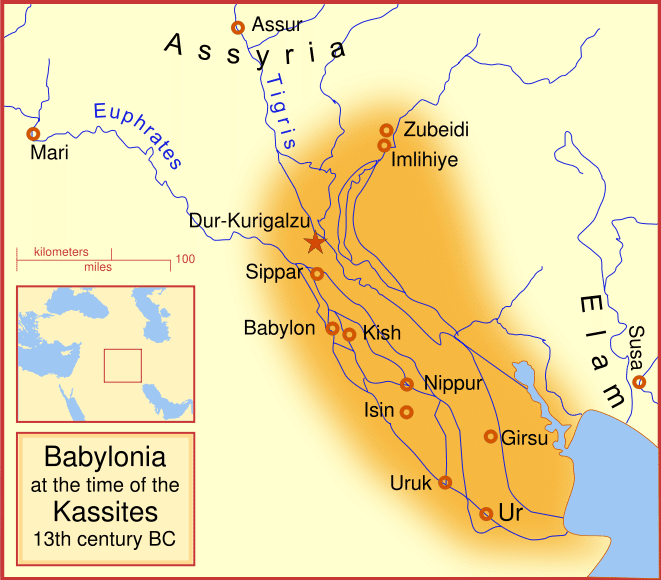
Civilizations developed along major rivers. There were four: Mesopotamia, Egypt, the Indus Valley, and the Yellow River.
Ur (3800 BC – 500 BC)
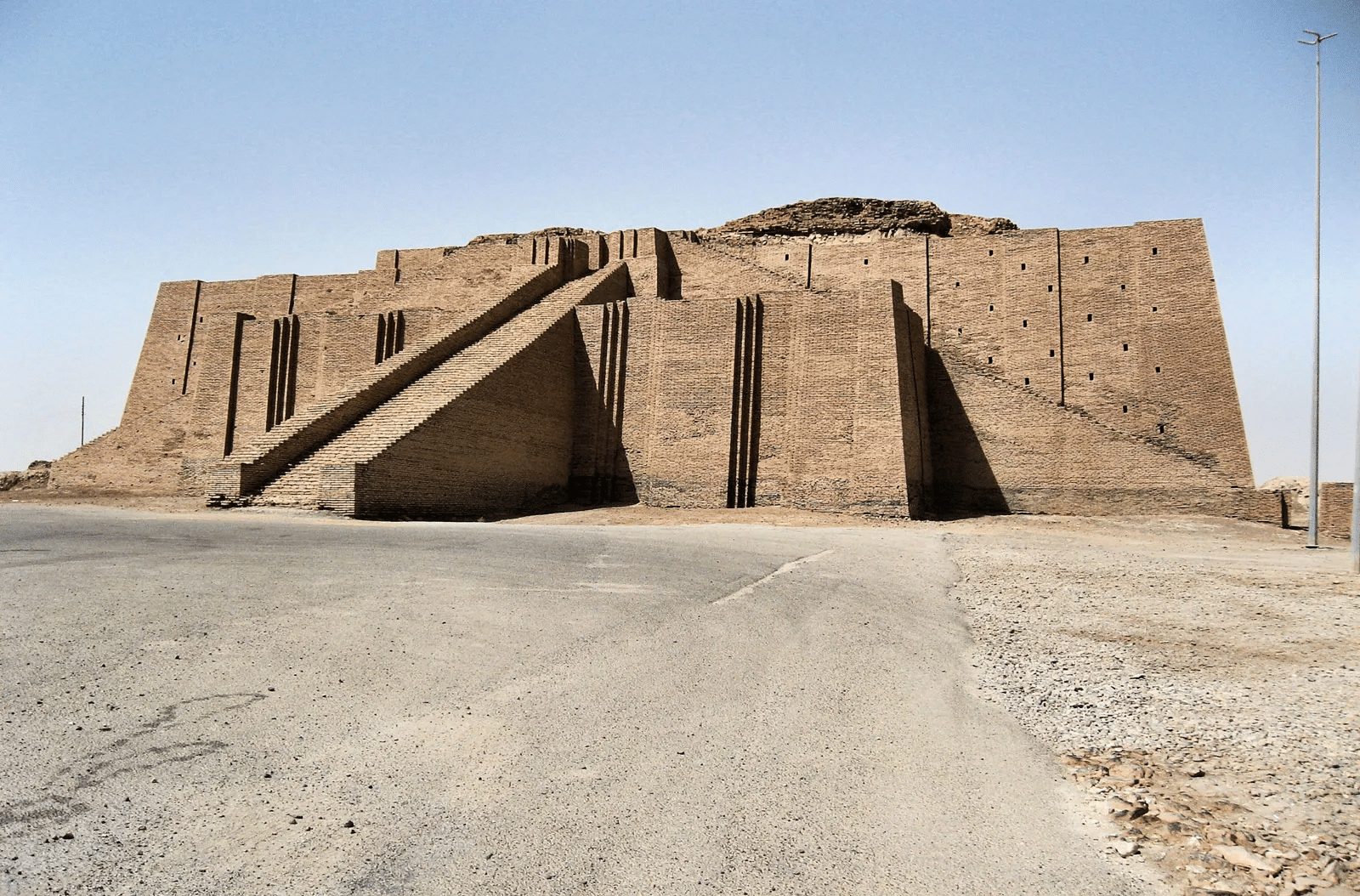
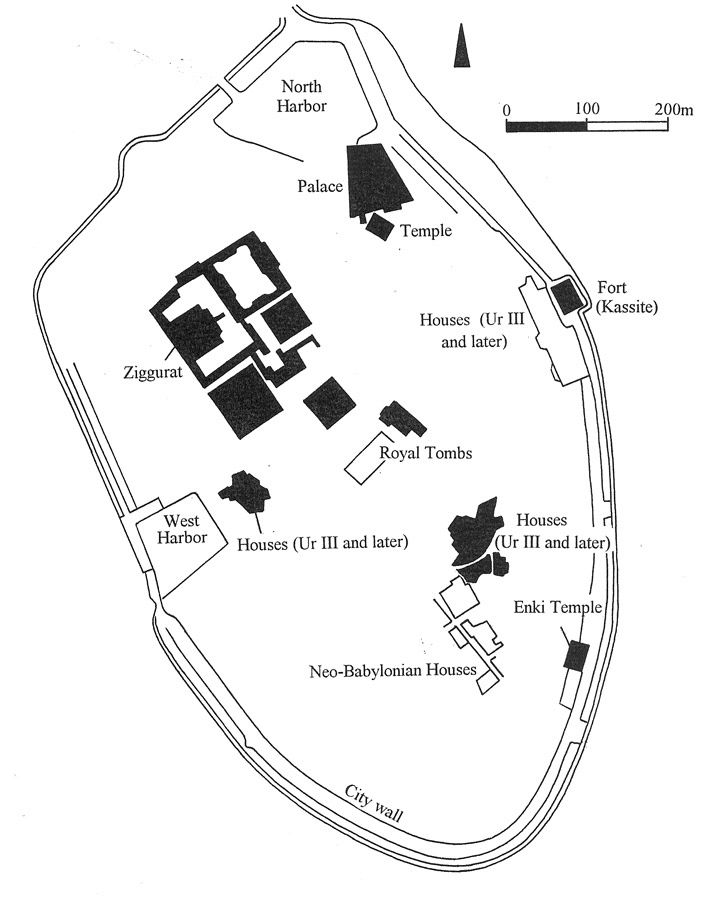
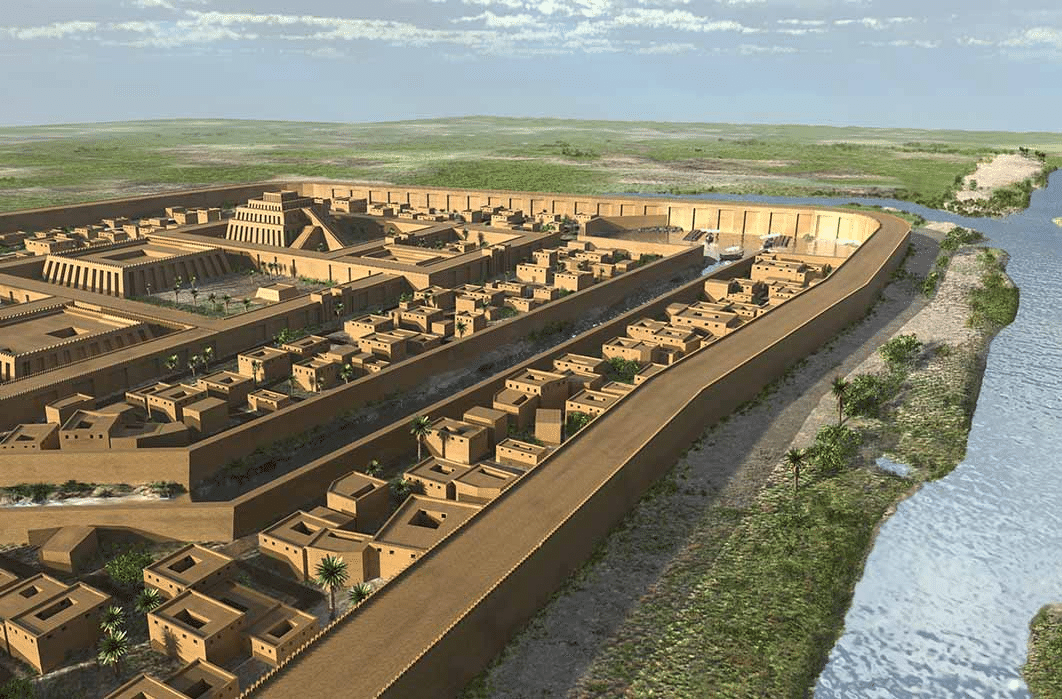
Ur was a Sumerian city of the Mesopotamian civilization. With no natural barriers in its surroundings, it was fortified with a moat and city walls. It is an example of urbanization on the small scale of a clan community.
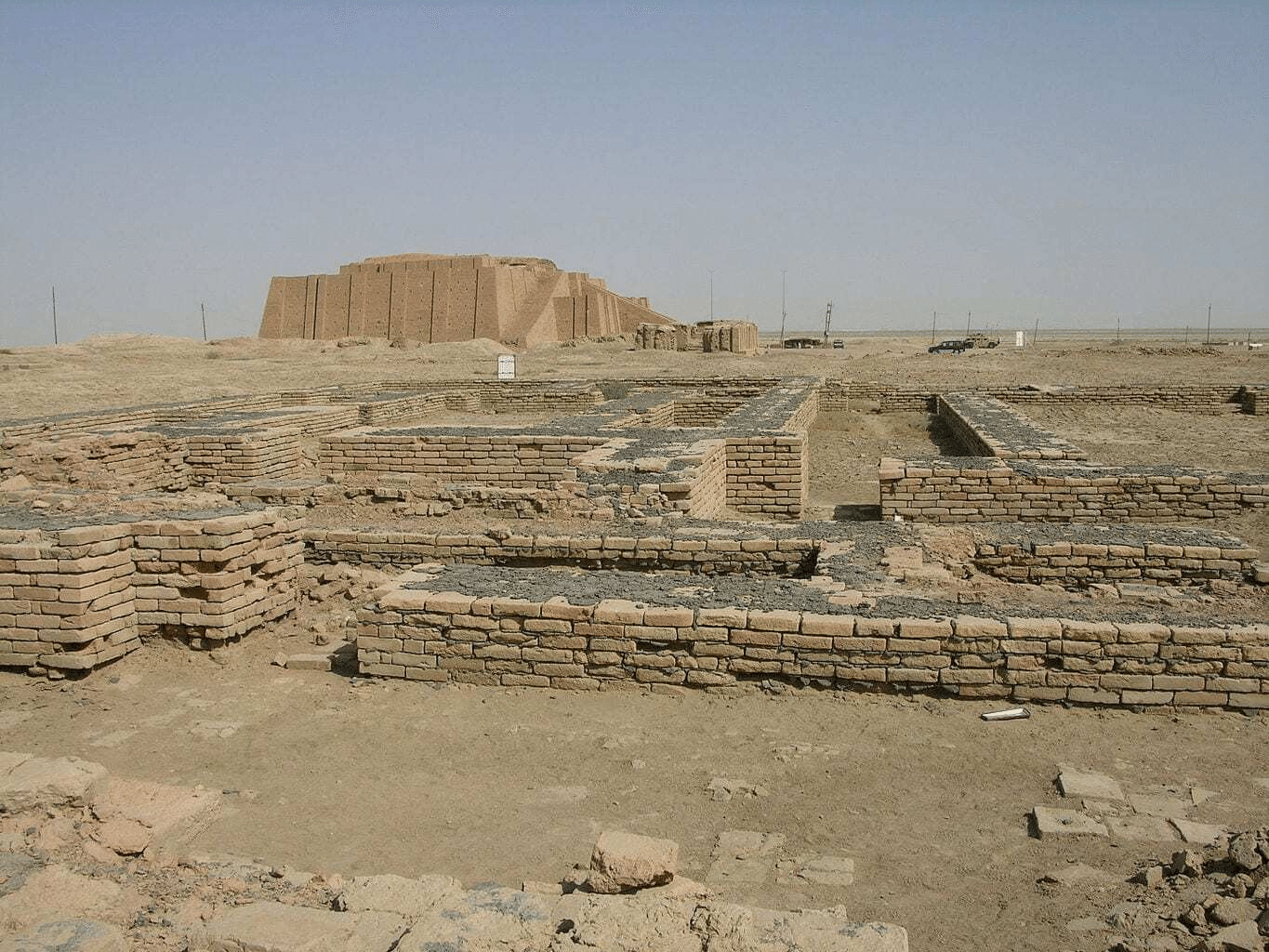
Its dwellings were built of mud brick and mud plaster. Almost all of their foundations survive today.
The ziggurat was a temple built during the Third Dynasty of Ur (2200 BC) and dedicated to the city's patron deity.
The Mesopotamian civilization came to an end in the 16th century BC, when Babylon was invaded by the Hittites, who wielded iron weapons.
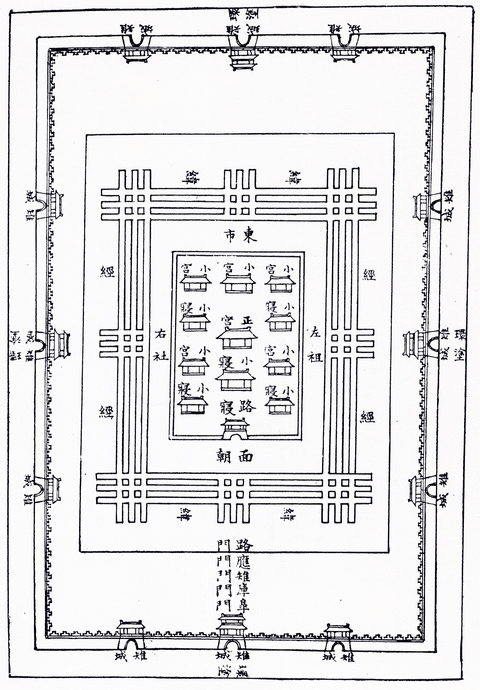
The Confucian vision of the city
The city had the following features:
A square plan, 3.9 km (9 li) on each side
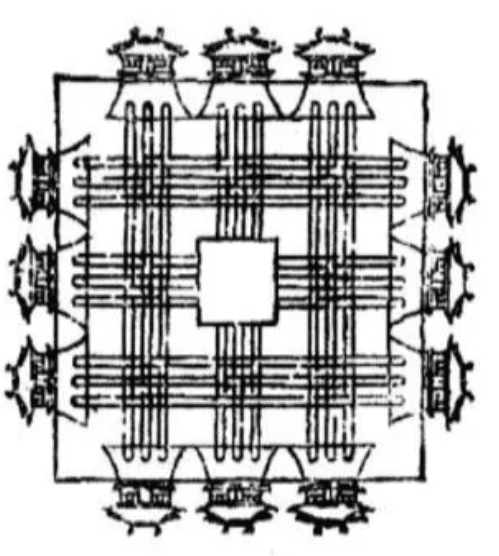
Three gates on each of the four sides, for a total of twelve
Three roads leading to the gates on each side—north, south, east, and west—with a carriageway in the center and footpaths on either side (the right for men, the left for women), 16 m in width
Enclosed by city walls
A royal palace at the center
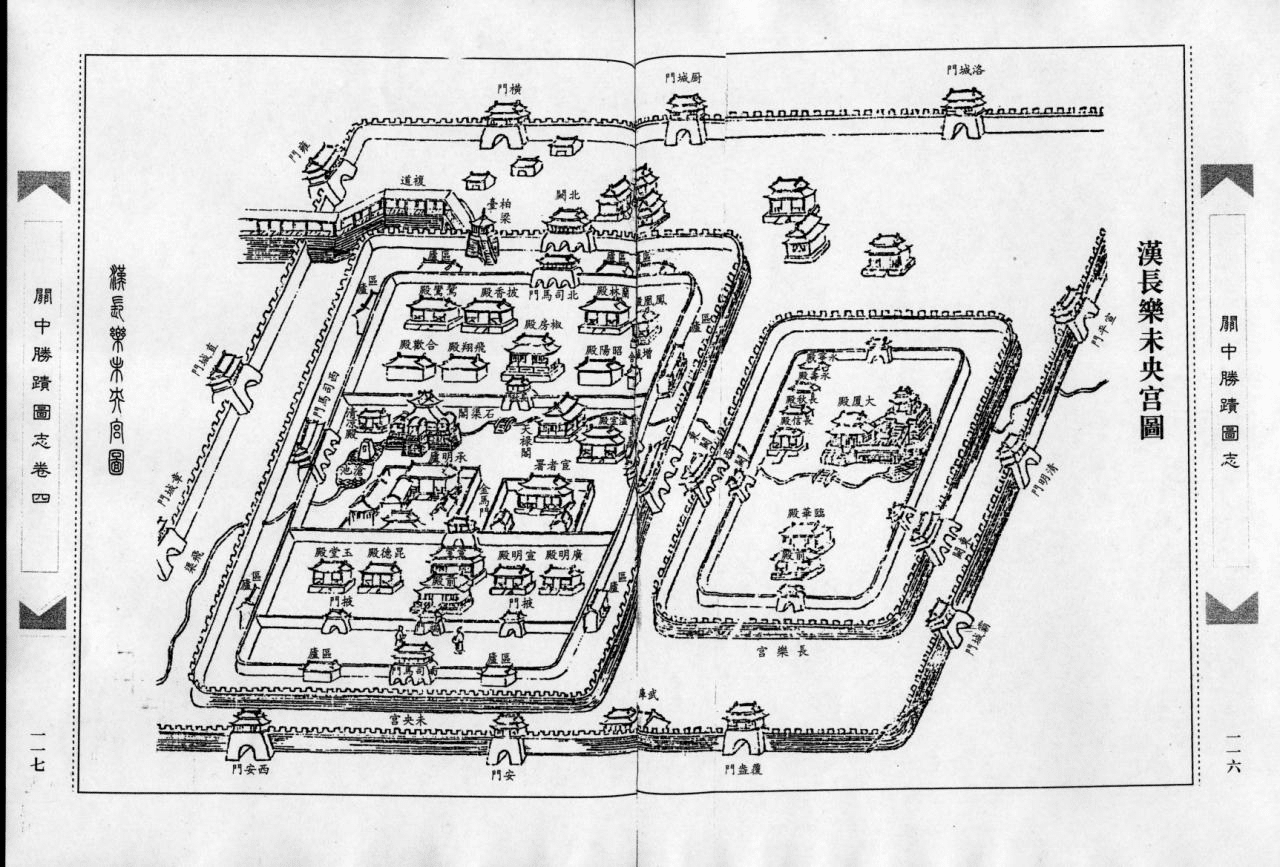
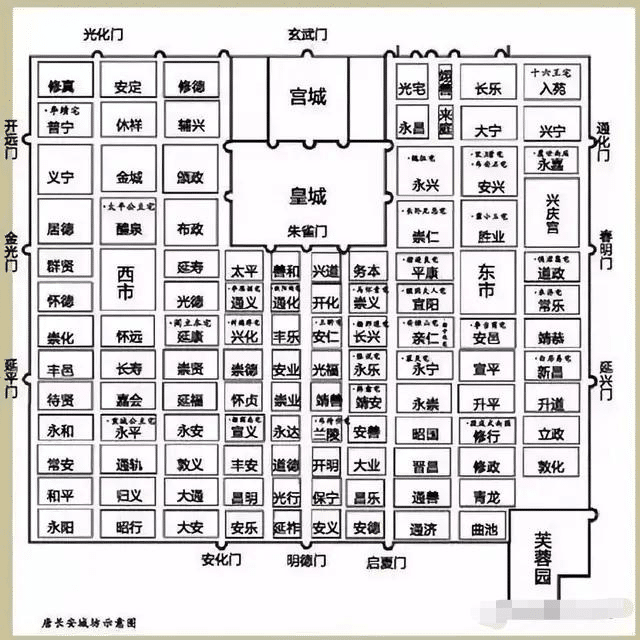
An urban structure based on the jōbō grid system, the city model set out in the Zhouli (800 BC – 400 BC), a Confucian classic
A great central avenue, the Suzaku Avenue, runs along the north–south axis.
A grid of roads running north–south and east–west was considered the most functional layout.
This same urban structure was later transmitted to the Korean Peninsula and Japan.
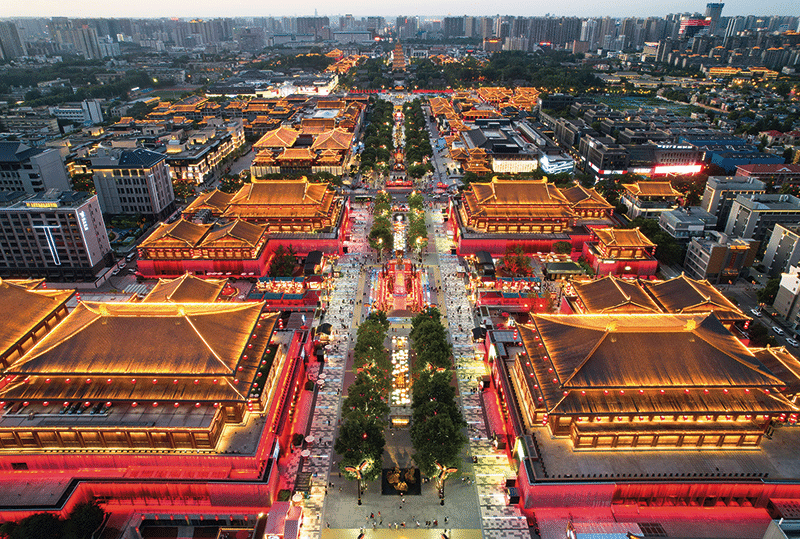
The agora (a place of political assembly and a marketplace)
In the cities of ancient Greece, an agora—serving as both a venue for political assembly and a marketplace—was built near the acropolis.

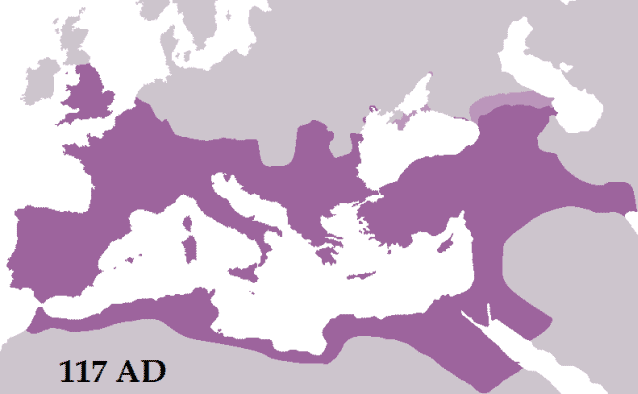
Roman and Greek colonial cities (700 BC – AD 500)
Rome expanded through colonial cities known as civitates, and Greece through those known as poleis. After conquering an enemy city, they would redistribute land and add new construction while working within the existing urban structure.
Many Western European cities, including London, Paris, and Barcelona, have their roots in Roman colonies, and traces of those origins can still be seen in them today.
The city walls formed a rectangle, with gates placed where the north–south and east–west roads met the walls. The main roads connected to other colonial cities.
The development and spread of iron tools (600 BC – 500 BC) boosted agricultural productivity.
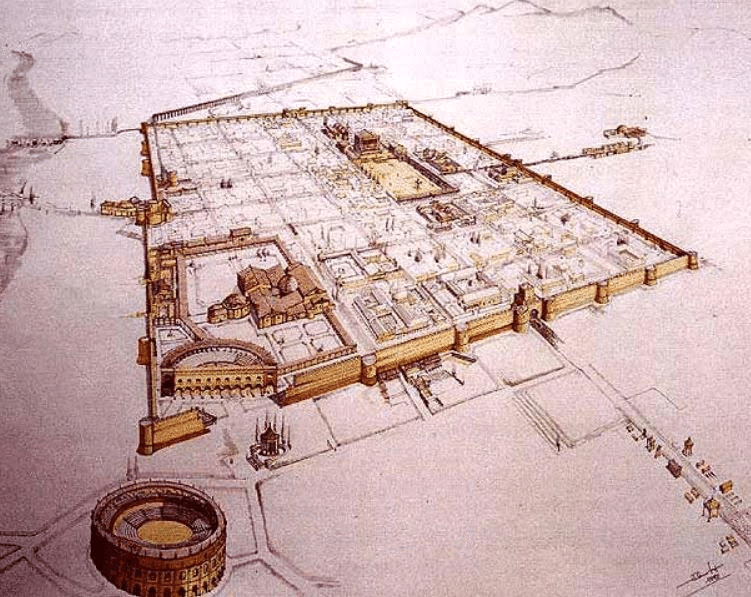
Florentia (59 BC – 6 BC)
Florentia was the Roman colonial city from which Florence originated. As the population grew, the city walls were moved outward. A grid plan was adopted to make planned growth easier.
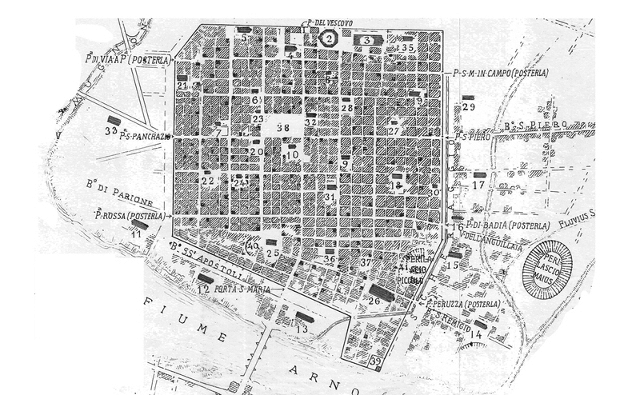
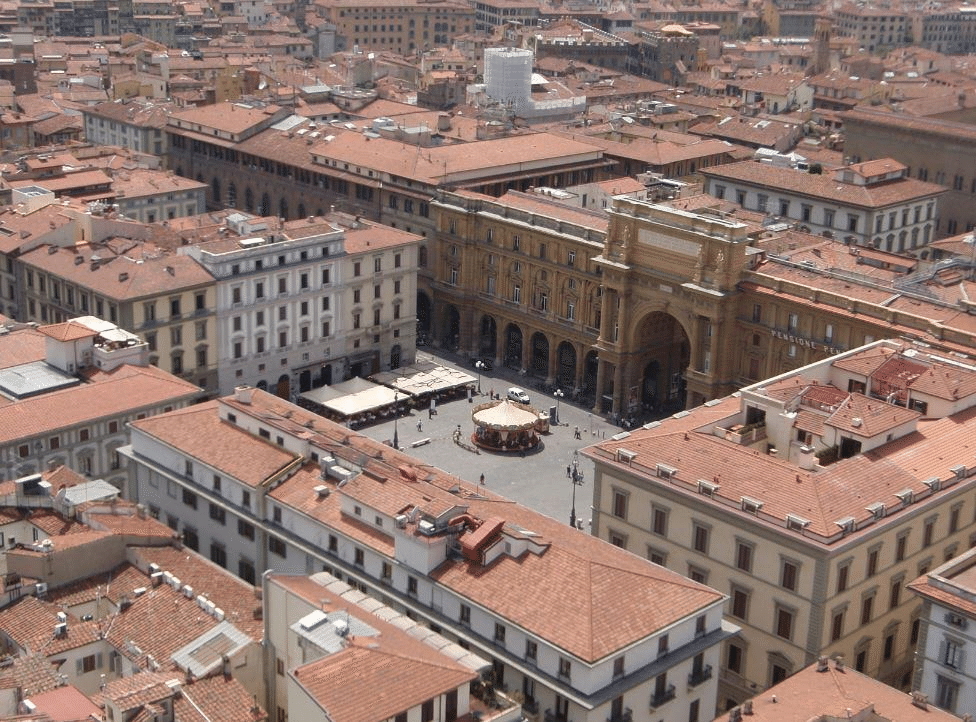
Turin
Turin began as a Roman colonial city and was expanded repeatedly from Roman times through the end of the 17th century.
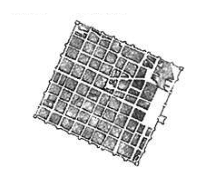
Grid plan
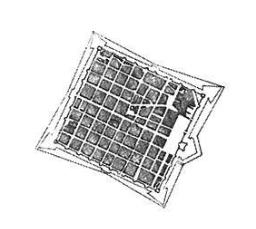
Following the invention of gunpowder, earthworks and bastions were added to accommodate the new weaponry
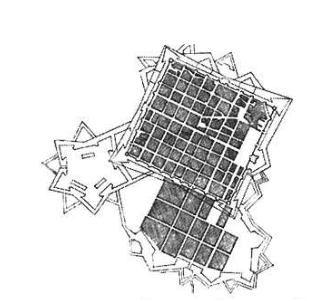
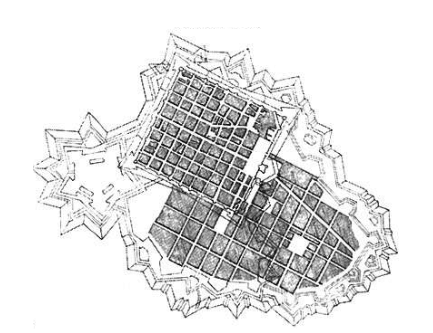
The city continues to expand, now in the artistic style of the Baroque period
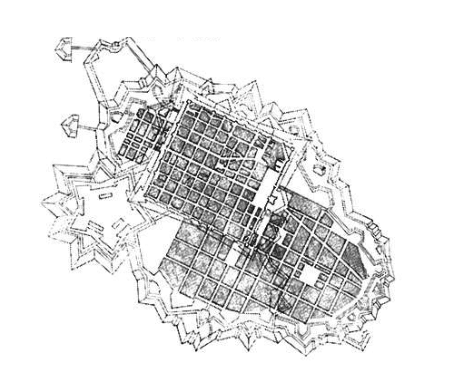
The city continues to expand, now in the artistic style of the Baroque period
Medieval Europe (12th – 13th centuries)
Improvements in weaponry, such as the invention of the crossbow, led to sturdier city walls, and cities were built on hills or islands for the sake of defense.
By the end of the 15th century, cannonballs had changed from stone to iron and gunpowder had come into use, rendering tall city walls obsolete; they were eventually demolished during the Baroque period of the 18th century.
As religion strengthened its hold as a unifying authority, churches and monasteries were built in great numbers in place of temples.
Street networks were irregular and maze-like. The representative architectural styles were Romanesque and Gothic.
Even as populations grew, city walls were not moved outward; cities instead grew ever denser, suffering from overcrowding, poor sanitation, and epidemics.
When the Ottoman Empire invaded the Byzantine Empire, Greek scholars fled to Italy, sparking the Renaissance there in the 14th–16th centuries. The resulting movement to revive the culture of ancient Rome and Greece gave rise to designs for geometric ideal cities.
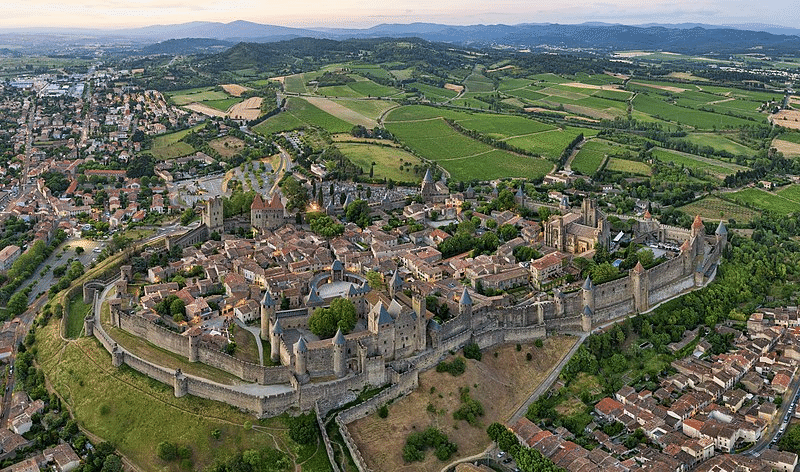
Carcassonne is a city in France and a medieval fortress. Perched on a hilltop, it is inscribed as a World Heritage Site.
The invention of the steam engine: the modern city of the Industrial Revolution (19th century to the first half of the 20th century)
The Industrial Revolution of the late 18th century marked the shift from manual labor to machine-based mass production.
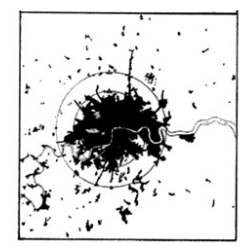
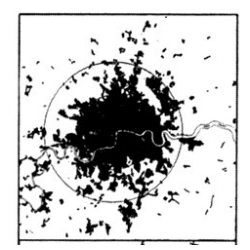
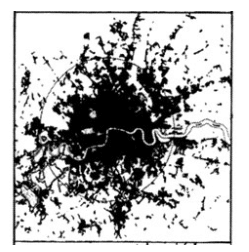
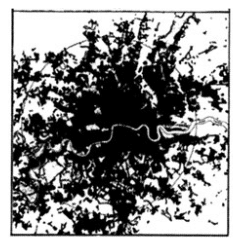
Workers and their families poured into the cities from the countryside as urban employment grew. London's population rose from 870,000 in 1801 to 6.5 million by 1900.
Advances in transport also drove urban expansion: horse-drawn carriages gave way to railways, and sailing ships to steamships.
The French Revolution at the end of the 18th century set democracy on the march, but at the same time colonial cities—a practice dating back to Greece and the Roman Empire—continued to multiply. Britain, for instance, founded colonial cities in many parts of the world.
Water supply and sewerage could not keep pace, and poor sanitation became a serious problem; cholera swept through British cities between 1830 and 1832.
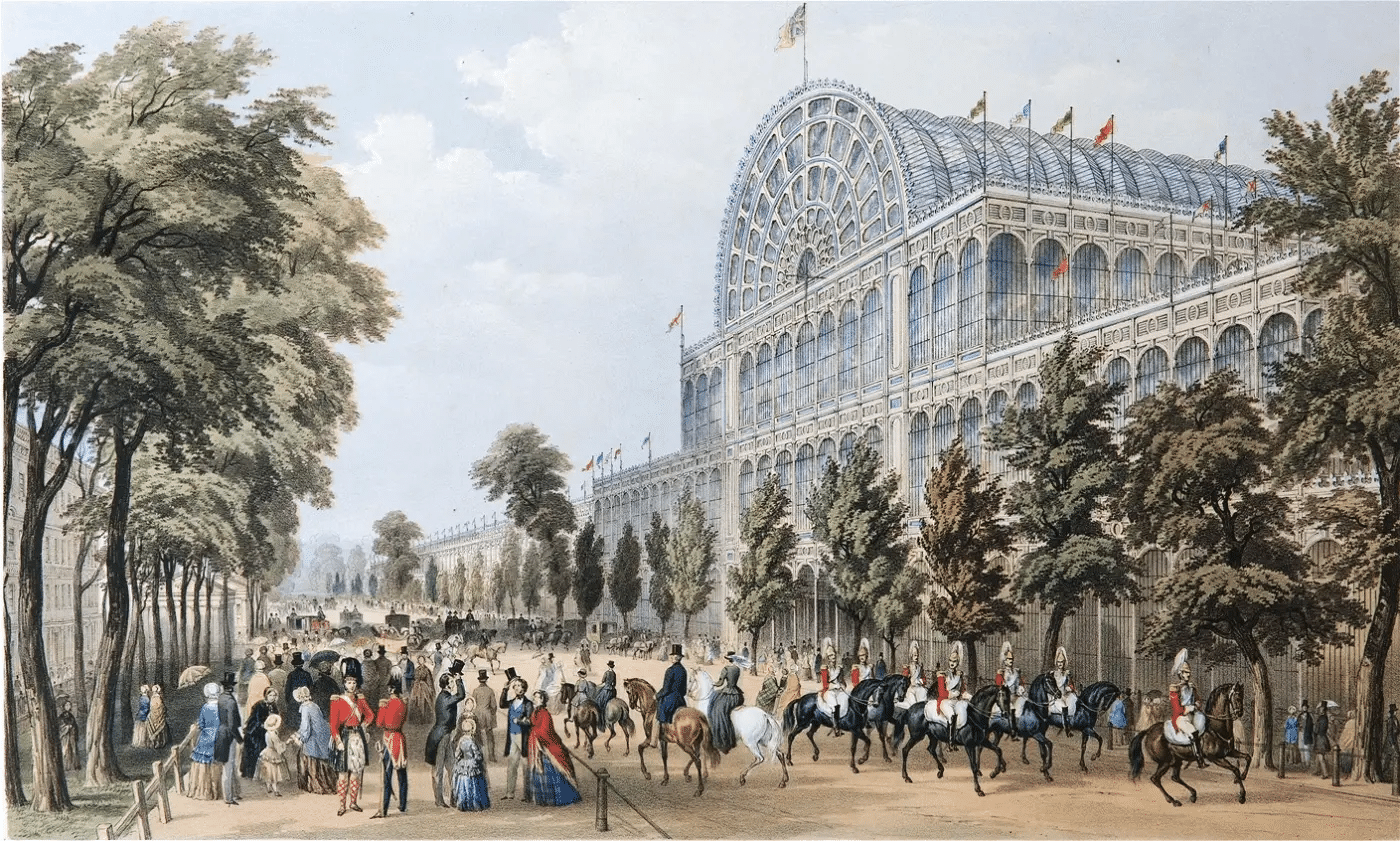
Mass production of iron and glass became possible, and buildings made of iron and glass began to appear.
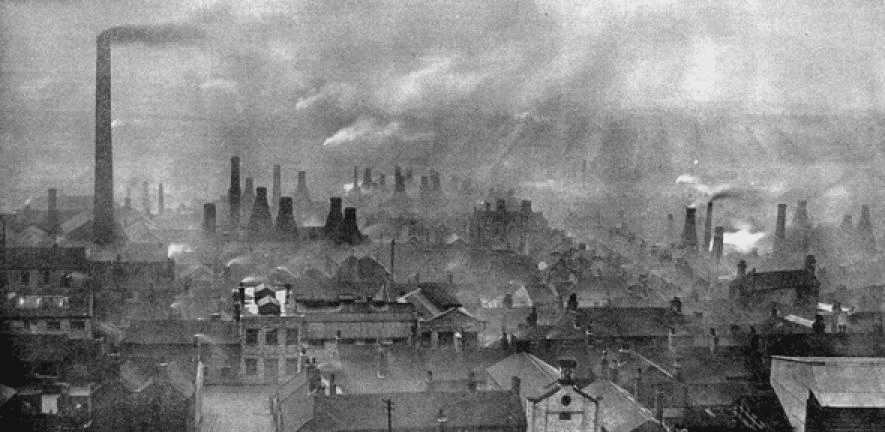
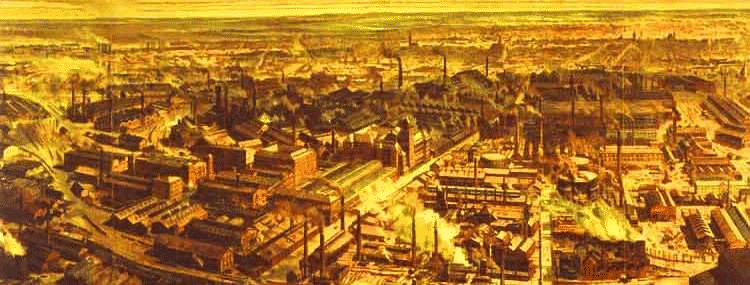
The growth of London's built-up area (Saarinen, 1945)


Enactment of the Public Health Act, building bylaws and housing legislation (mid-19th century)
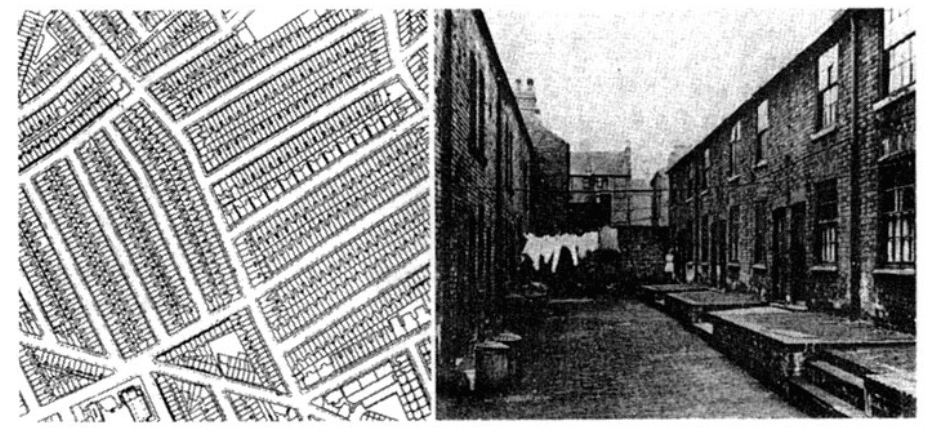
Housing demand surged, overcrowding became acute, and public health and road provision emerged as pressing problems. Following Britain, where the Industrial Revolution began, the same issues arose in other countries across Europe and in the United States.
Britain enacted the Public Health Act in 1848. Building bylaws then used zoning to control matters such as securing road space, building lines and building heights.
Water supply and sewerage systems were built, and factories were separated from residential districts. Moves to enact similar legislation spread to Germany, France and the United States, and concepts such as the neighborhood unit theory emerged.
The invention of the automobile: growth of urban transport networks (early 20th century)
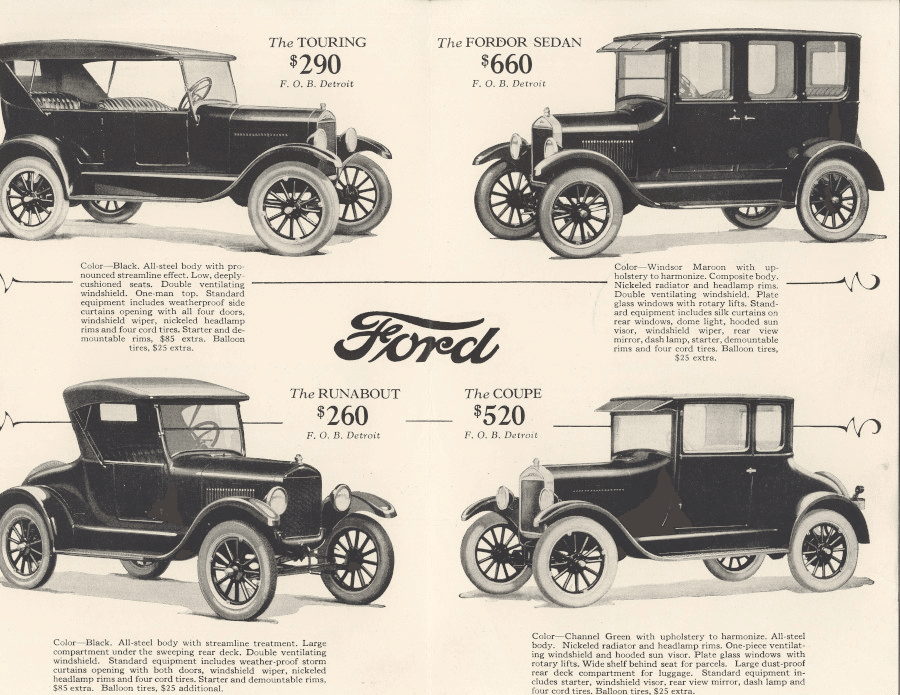
Assembly-line mass production made cars affordable, and they spread rapidly.
With cars widely available, people could live far from the city center, and road networks were expanded and highways built. Homes, too, now needed garages and parking space.
Large shopping malls and suburban retail outlets multiplied, reshaping where commercial districts were located within cities. At the same time, air and noise pollution increased, making the provision of green space and the management of traffic volumes key challenges in urban planning.
The invention of the airplane: cities linked on a global scale (mid-20th century)
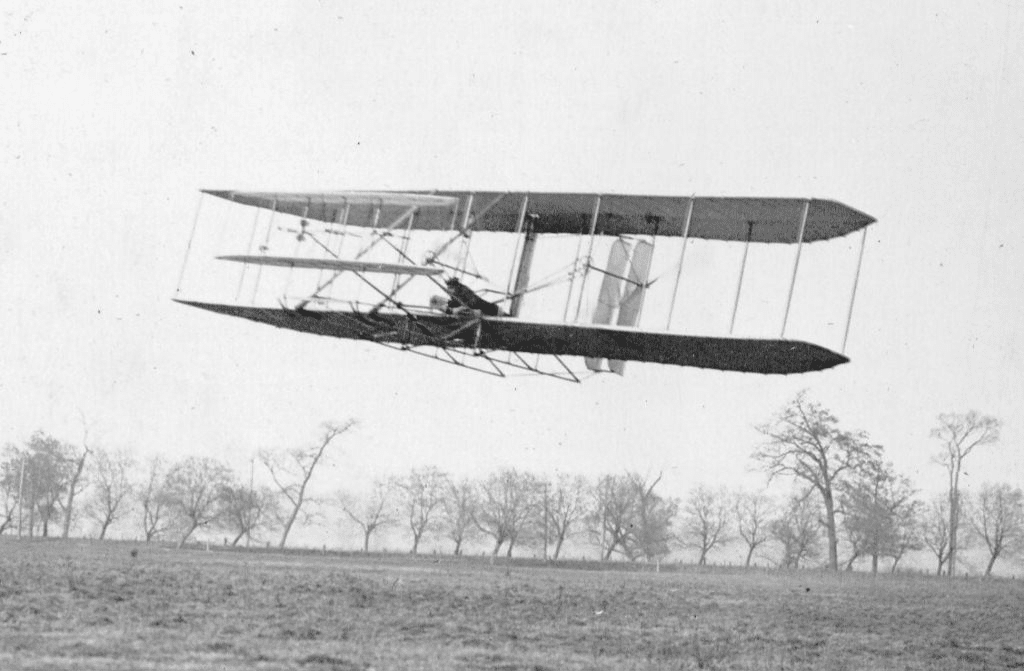
Aircraft connected cities around the world within hours, and cities serving as hubs for international business, trade and tourism rose to prominence.
As more and more people traveled by air, cities and regions gained international attention as tourist destinations.
Large airports became facilities requiring special consideration in urban planning, from noise problems to ensuring safety.

The invention of the internet: communication no longer bound to physical surroundings (late 20th century)
Smart cities emerged, managing urban infrastructure such as transport, energy and public services more efficiently.
Remote work made it possible to work from anywhere, helping to ease urban traffic congestion and reduce the concentration of population in city centers.
With information flowing easily over the internet, economic and cultural exchange between cities and rural regions intensified.
Many services—entertainment, education, healthcare and more—moved online, profoundly changing the way people live in cities.
New 21st-century technologies set to reshape cities and buildings (21st century onward)
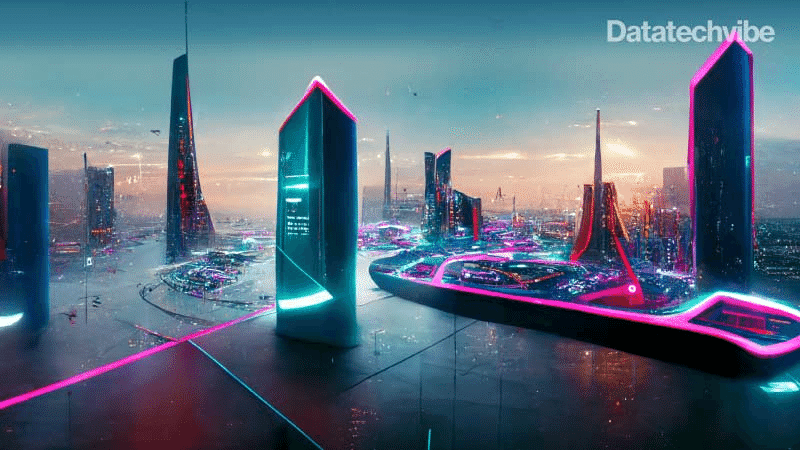
AI
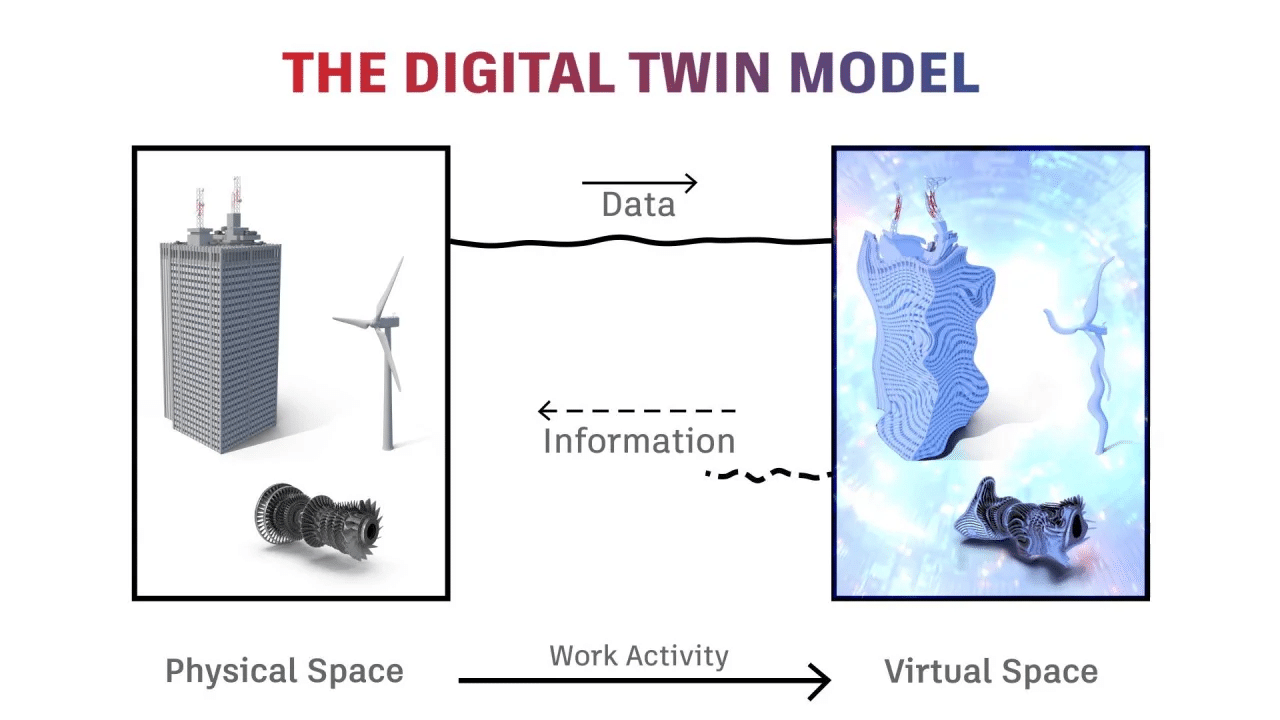
Digital twins have emerged: virtual replicas of real cities that enable all kinds of analysis. Data gathered via the internet and IoT is optimized with AI to make more efficient use of urban resources, from electricity to environmental load.
Drones
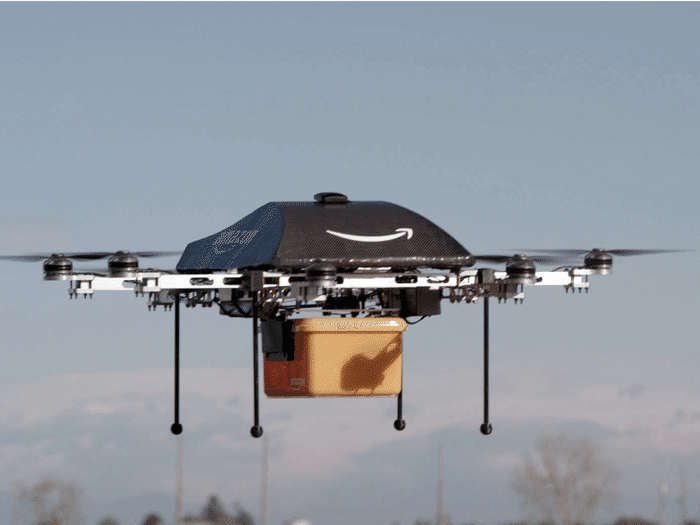
Drones make unmanned logistics possible, promising more efficient distribution and a solution to driver shortages.
The metaverse, VR and AR
These are digital platforms that enable social interaction, economic activity and entertainment in virtual space. Recreating the buildings and public spaces of real cities within the metaverse promises to streamline urban planning and construction processes.
As education, work, entertainment and communication are increasingly delivered in the metaverse, the need for physical travel may decline.
Exhibiting and debating city models in virtual space could also allow citizens to take a more active part in urban planning.
And as demand for real estate and space within the metaverse grows, it could set new dynamics in motion in real-world property markets.
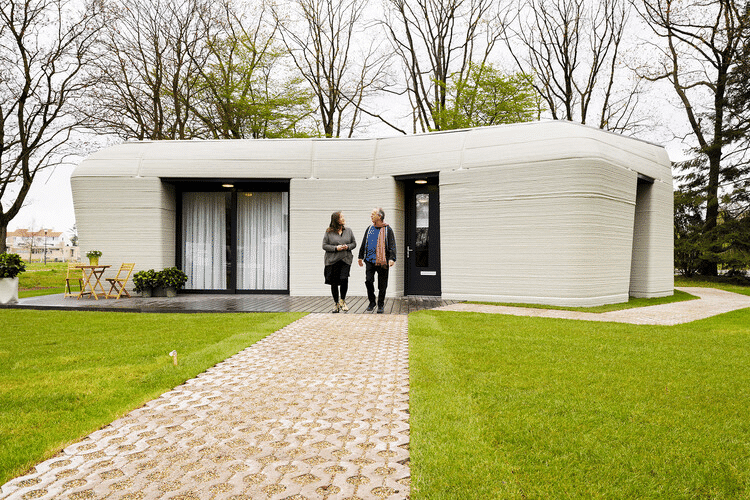
Construction 3D printers
3D printers can build houses and other structures, cutting construction time and labor costs and making construction work more efficient.
Commercial passenger spacecraft
Private citizens may one day be able to travel to space at low cost, potentially expanding the places where humans can live to other planets and beyond.

Conclusion
In this article we have looked back over the history of cities and architecture and traced how technology has shaped them along the way.
What emerges is that people have been progressing toward the prosperity of their communities—family, nation and so on—in other words, toward higher survival rates and a larger population able to live together. The key factors here are the size of the social population, the total fertility rate, length of residence and lifespan, and the degree to which values are shared; each new technology or body of knowledge can be seen as contributing to one or more of these factors.
Technologies that emerge in the years ahead will likewise be adopted into human society, cities and buildings in roles that contribute to these key factors.
The end
Read next ↓