
Articles
The hard work ethos of great leaders and organizations
Product
Career
Automatically translated from the Japanese original.
Introduction
Almost every story about people or organizations that have achieved something truly great includes the same detail: they worked harder and committed more deeply than anyone around them. As a rule, most great figures have devoted nearly all of their time to realizing their mission.
When I was finishing high school and thinking about what to do with my future, I looked into the people I admired and wanted to become. Once I discovered that almost all of them were extraordinarily committed, I decided to follow their example: I try to spend essentially all of my waking hours on the work I have set out to do, and I have deliberately cut away everything else. I don't find this painful at all; it feels like spending the whole day on a hobby (an incredibly demanding one, admittedly). Today I'm running a startup and taking on an extremely difficult challenge, in a situation that demands exactly this kind of high commitment.
What follows is a collection of stories about the hard work of great people, offered as a reference point. My hope is that it gives some sense of just how intensely one must focus, at both the individual and the organizational level, in order to accomplish something great.
Below, I've organized stories of hard work by individuals and by organizations; for the organizations, I've also summarized the guiding principles that make that kind of hard work possible.
Stories of Hard Work: Individuals
Startup Founders
Elon Musk (founder of Tesla and SpaceX)
- Achievements: First privately developed rocket to reach orbit (SpaceX, 2008); built Tesla into the world's largest EV maker
- The story: Musk has said publicly that "you have to work 80 to 100 hours a week. If someone else is working 40 hours and you're working 100, you'll accomplish in four months what takes them a year." In August 2008, after SpaceX's third rocket failure, he declared that he would never give up, and just seven weeks later the company became the first private firm to reach orbit.
Jeff Bezos (founder of Amazon)
- Achievements: Grew Amazon into one of the world's largest e-commerce and cloud companies; founded Blue Origin
- The story: In Amazon's early days, Bezos worked twelve-hour days, seven days a week, staying up until 3 a.m. to get books shipped out.
Bill Gates (co-founder of Microsoft)
- Achievements: Established the global standard for PC operating systems; held the top spot on the world's rich list for many years
- The story: "When I'm working on code, I finish it; I don't worry about sleep," Gates has said. He would skip meals and work while licking powdered Tang orange drink from the palm of his hand. He founded Microsoft at 20, "didn't believe in vacations or weekends," and looked down at the parking lot every day to keep track of who left early and who stayed late.
Steve Jobs (co-founder of Apple)
- Achievements: Revolutionized personal computing through the Mac, iPod, iPhone and iPad
- The story: Jobs kept up his notorious 80-hour weeks, and in his own words, "in my twenties I worked really hard—seven days a week, long hours every day." He set himself the goal of completing three to five critical tasks within 18 hours each day.
Mark Zuckerberg (founder of Meta/Facebook)
- Achievements: Built the world's largest social network; founded Facebook at 19 and became the world's youngest self-made billionaire at 23
- The story: In January 2004, Zuckerberg shut himself in his room in Harvard's Kirkland Hall for a week, ignoring his friends and barely eating, and wrote the code for a new social networking site. He later recalled coding late into the night on a small laptop while the guy across the hall stole his Hot Pockets (frozen snacks).
Leaders of Large Corporations
Warren Buffett (Berkshire Hathaway)
- Achievements: One of the most successful investors in history; built Berkshire Hathaway into one of the world's largest holding companies
- The story: "I just read, read, read. I read five or six hours a day—five newspapers, magazines, 10-Ks, annual reports." Buffett has spent roughly 80% of his working hours reading and thinking, and has kept that up throughout a career of more than 60 years. By the age of ten he had read every book on investing in the Omaha Public Library.
Jeff Immelt (former CEO of GE)
- Achievements: Led GE, one of the world's largest conglomerates, for 16 years
- The story: Nicknamed the "bionic manager," Immelt worked 100-hour weeks for 24 years. Even during his 5:30 a.m. workouts he was reading the newspaper and watching CNBC.
Tim Cook (CEO of Apple)
- Achievements: As Jobs's successor, grew Apple into the world's most valuable company by market capitalization
- The story: Cook starts sending emails at 4:30 a.m., is the first to arrive at the office and the last to leave. He used to hold staff meetings on Sunday nights to prepare for Monday.
Athletes
Michael Jordan (NBA, Chicago Bulls)
- Achievements: Six NBA championships, five MVP awards, two Olympic gold medals; widely regarded as the greatest player of all time
- The story: His UNC teammate James Worthy recalled: "After two and a half hours of hard practice, I'd be walking off the court drenched in sweat and exhausted, and Michael would push me back on to play one-on-one." Former teammate Brendan Haywood said, "Even when practice started at eleven, MJ was there at eight in the morning." According to his trainer Tim Grover, Jordan never asked for a single day off and trained every morning after a game, without exception.
Cristiano Ronaldo (football)
- Achievements: Five Ballon d'Or awards, five UEFA Champions League titles, and the all-time leading goal scorer in men's football
- The story: Throughout his professional career, Ronaldo has made a rule of being the first to arrive at training and the last to leave. He keeps a recovery pod costing tens of millions of yen at his home, eats six small, clean meals a day, and manages his sleep rigorously in 90-minute cycles. He has sustained this lifestyle—devoting all 24 hours of every day to improving his performance on the pitch—for more than 20 years without a break.
Tiger Woods (golf)
- Achievements: 15 major championships, 82 PGA Tour wins, and the youngest-ever Masters champion at 21
- The story: From the age of six months, Woods watched his father Earl's swing from his high chair and learned from it. He took his first swing at ten months, appeared on national television at two to demonstrate a perfect drive, and shot 48 over nine holes at three. As a teenager he was still practicing ten to thirteen hours every day.
Serena Williams (tennis)
- Achievements: 23 Grand Slam singles titles (the most in the Open Era) and four Olympic gold medals; one of the greatest players in the history of women's tennis
- The story: As a child, on the cracked public courts of Compton, a neighborhood so dangerous that gunshots could be heard, she kept practicing her serve long after the sun had gone down and it was pitch dark, relying only on the sound and feel of the ball. Even after reaching the top, she stated flatly: "There may be players with more talent than me, but there is absolutely no one who practices harder."
Ichiro Suzuki (MLB; Orix BlueWave, Seattle Mariners and others)
- Achievements: 3,089 career hits in MLB; 262 hits in a single season (an MLB record); 4,367 combined hits in Japan and the U.S.; two batting titles; ten Gold Gloves
- The story: Ichiro began training every day in the third grade and never stopped, not even once. With his father at a neighborhood park, he threw 50 pitches, took 200 soft-toss swings and fielded 50 grounders, 365 days a year. In the evenings he hit another 250 to 300 balls at the batting center. In an elementary school essay he wrote that he played with friends "only two or three days a year." In his entire professional career, he took just one vacation.
Tom Brady (NFL)
- Achievements: Seven Super Bowl titles (the most in NFL history) and five Super Bowl MVP awards; played at the top level until the extraordinary age of 45 in the NFL, an intensely physical contact sport
- The story: During the January-to-March off-season, when other quarterbacks were on vacation, Brady kept training under his "TB12 Method" at a private facility in the Bahamas every year. His teammates testified in unison that "he's the first one at the practice facility and the last one to leave." He maintained a routine of going to bed at 8:30 every night and rising at 5:30 for 23 seasons. Even in his forties, he continued to do as much film study and physical training as the younger players, if not more.
Academics and Researchers
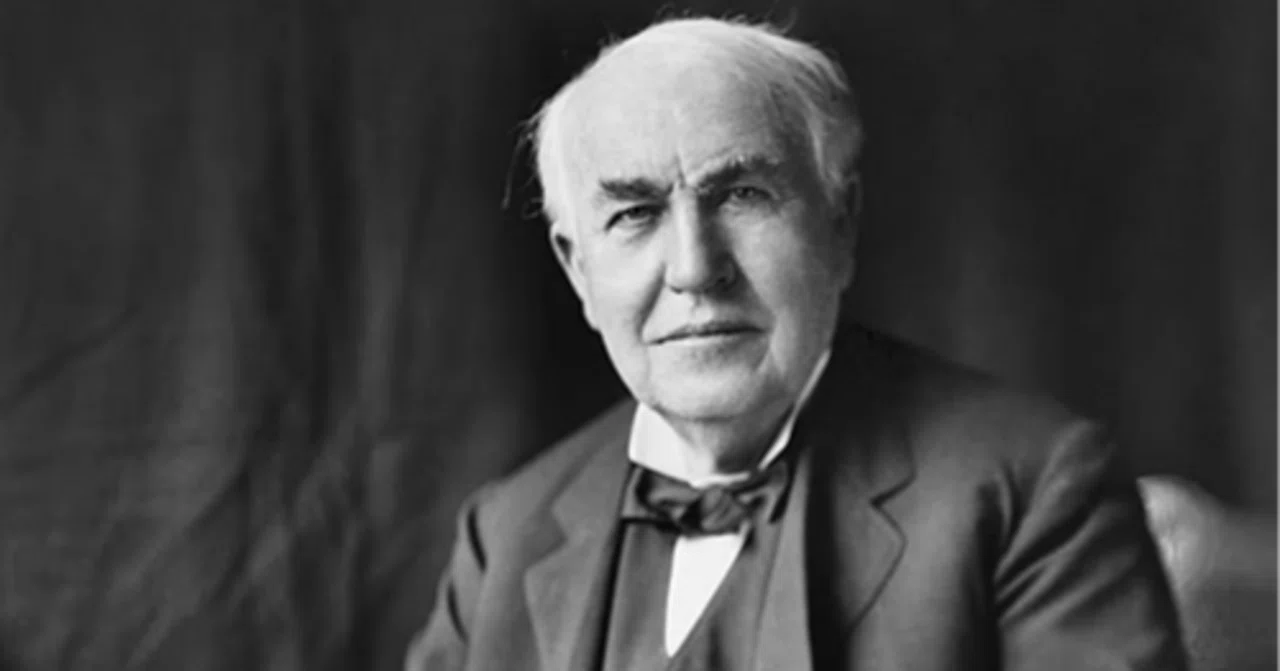
Thomas Edison (inventor)
- Achievements: 1,093 U.S. patents; brought the incandescent light bulb, the phonograph and motion pictures into practical use
- The story: For most of his adult life, Edison worked an average of 18 hours a day. He would become so absorbed in a new project that he forgot to eat, sleep or bathe, and once passed out in his workshop after working 72 hours straight. When his printing machine failed, he took five men up to the factory loft and announced that they would not come down until it worked; they labored for 60 hours without a break, after which he slept for 30. At the age of 65, he logged a week of 112 hours and 6 minutes of work.
Andrew Wiles (mathematician, Fermat's Last Theorem)
- Achievements: Proved Fermat's Last Theorem, which had gone unsolved for 358 years (1994); awarded the Abel Prize (2016)
- The story: Wiles proved Fermat's Last Theorem, unsolved for 358 years, by working on it alone and in secret for seven years. In his own words: "Very few people want to work on a problem for that long. It takes a certain kind of personality to really throw yourself into a problem."
Artists (Fine Art, Music and Literature)
Pablo Picasso (painter, Spain)
- Achievements: Founded Cubism and revolutionized 20th-century art; produced over 13,500 paintings, 100,000 prints, 300 sculptures and 34,000 illustrations over his lifetime
- The story: Picasso shut himself in his studio for twelve hours a day, working from 2 p.m. to 10 p.m. and then, after dinner, painting again from 11 p.m. until 3 a.m. "Only put off until tomorrow what you are willing to die having left undone," he said. He kept up a career spanning 78 years, working from the age of four until 73.
Ludwig van Beethoven (composer)
- Achievements: The Ninth Symphony and 32 piano sonatas; produced masterpieces even as he lost his hearing
- The story: Beethoven rose at dawn and went straight to work. For breakfast he brewed coffee from exactly 60 beans per cup, counting them out one by one, and then worked at his desk until two or three in the afternoon. He composed for nearly eight hours every day.
Wolfgang Amadeus Mozart (composer)
- Achievement: The pinnacle of classical music. Left behind more than 600 masterpieces in a short life.
- The story: Mozart is the very byword for "genius," yet he was in fact a ferocious worker. He kept a punishing schedule: up at six every morning to compose, teaching pupils during the day, performing in concerts himself in the evening, and then composing again until one in the morning. Even while traveling by carriage, he was constantly composing in his head.
Stephen King (novelist)
- Achievement: More than 60 novels, more than 200 short stories, and over 350 million copies sold worldwide
- The story: King writes 2,000 words (roughly six pages) every single day, with no days off for weekends or holidays—a habit he has maintained into his seventies. Writing 365 days a year, he starts between 8:00 and 8:30 a.m. and keeps going until he hits his target. In his words, "Putting down your own words every day is like training a mental muscle."
Stories of Hard Work from Organizations
Startups
Tesla
- Achievement: The world's largest EV maker, accelerating the auto industry's shift to electric vehicles
- The story: During the Model 3 production crisis of 2018, Musk said, "I slept on the floor of the Tesla factory. I could have gone to a hotel, but I deliberately wanted my situation to be worse than my employees'." During the Shanghai lockdown in 2022, workers at Tesla's Shanghai plant slept on the factory floor on mattresses and in sleeping bags, working 12-hour shifts six days a week.
SpaceX
- Achievement: The first private company to reach orbit, commercialized reusable rockets, and revolutionized satellite internet with Starlink
- エピソード: マスク自身が「週80〜100時間」労働を公言。Walter Isaacson『Elon Musk』(2023)によれば、SpaceXのエンジニアは「ロケット燃焼の前夜」のような切迫感で働き続け、創業期は数年間オフィスで寝泊まり
Twitter/X
- Achievement: Kept the service running after the acquisition while shrinking the core team to under 20% of its former size
- The story: In November 2022, Musk emailed every Twitter employee demanding that they either commit to being "extremely hardcore" or leave. He called for "long hours at high intensity" and offered three months' severance to anyone who chose to go. Conference rooms at the San Francisco headquarters were converted into bedrooms—complete with mattresses, curtains, and monitors—so that employees could stay overnight.
Amazon
- Achievement: The world's largest e-commerce site, creator of the cloud industry through AWS, and one of the most valuable companies on earth by market capitalization
- The story: In 2015, The New York Times published a sweeping investigation based on interviews with more than 100 current and former employees. In it, a former HR director described Amazon's culture as "purposeful Darwinism." Employees who had dealt with cancer, miscarriages, or other personal crises said they had been "evaluated unfairly," and one woman reported being pressured to return to work shortly after a miscarriage. Bezos himself has said, "You can work long, hard, or smart, but at Amazon.com you can't choose two out of three"—a line that captures the company's punishingly demanding, high-output work ethic, in which all three are expected at once.
Apple
- Achievement: The personal computing revolution, and the birth of the iPod and iPhone
- The story: The original Macintosh team wore T-shirts that read "90 hours a week and loving it." For most of the project, they worked six to seven days a week, 10 to 13 hours a day.
Microsoft
- Achievement: Established the global standard for PC operating systems and dominated productivity software with Office
- The story: Gates's philosophy was simple: when you're working on code, you finish it—sleep doesn't matter. He would work with powdered Tang orange drink poured onto his hand, licking it as he went. He also kept a daily log, looking down at the parking lot to note who left early and who stayed late.
Facebook/Meta
- Achievement: The world's largest social networking platform, with more than 3 billion users
- The story: Former employee Noah Kagan has said that "working 12-plus hours a day at Facebook was normal." Musk's "Move fast and break things" served as the internal mantra. In January 2004, Zuckerberg holed up in his Harvard dorm room for a week, ignoring friends and barely eating, and wrote the code for Facebook.
Alibaba and China's "996" Tech Culture
- Achievement: One of the world's largest e-commerce operations, plus dominance of digital payments (Alipay) and cloud services in China
- The story: Jack Ma publicly called "996"—working 9 a.m. to 9 p.m., six days a week—a "huge blessing." "If you can do 996, it's a huge blessing," he said. "If you want to join Alibaba, you should be prepared to work 12 hours a day. Otherwise, why join?" JD.com founder Richard Liu likewise declared that while he wouldn't force 996 on anyone, "slackers are not my brothers."
ByteDance(TikTok)
- Achievement: TikTok, the app that swept the globe from China, and a valuation of over $300 billion in just a few years
- The story: The "Big/Small Week" system—working Saturdays every other week—made a six-day week the de facto standard. It was officially abolished in 2021 under tightening regulatory pressure from authorities, but the culture of long hours remains deeply entrenched.
OpenAI (developer of ChatGPT)
- Achievement: Led the generative AI revolution with the launch of ChatGPT; valued at over $300 billion
- The story: A "move fast" culture has defined the company since its founding, with 60- to 80-hour weeks the norm. Sam Altman has said that during the development of GPT-4, the engineers worked with extraordinary focus. There was also a period when many employees brought sleeping bags into the office.
Finance
Goldman Sachs (investment bank)
- Achievement: The world's most powerful investment bank, ranked number one globally in M&A and IPO underwriting
- The story: In 2021, an internal survey conducted by 13 first-year analysts was leaked. It described severe burnout from 100-hour weeks: "It's physically and mentally hard, and I'm in a really dark place." One respondent wrote that "110-hour weeks leave only four hours a day for sleep and self-care—it's inhumane."
JPMorgan Chase (investment banking division)
- Achievement: One of the world's largest banks, ranked number one globally in M&A advisory and underwriting
- The story: At the bulge-bracket investment banks (Goldman, JPM, BofA), the industry standard is 60 to 80 hours a week, climbing to 100 hours roughly once a month. After the death of a Bank of America intern in 2013, the industry as a whole introduced "protected weekend" policies.
Bridgewater Associates (the world's largest hedge fund)
- Achievement: The world's largest hedge fund, with over $150 billion in assets under management; founded by Ray Dalio
- The story: The firm's culture is built on "radical transparency" and "radical truth." Every discussion between employees is recorded and made available to the entire company, and staff rate one another through a "Dot Collector" system.
Consulting
McKinsey & Company
- Achievement: The world's largest management consultancy, advising more than 90 of the Fortune 100 and producing a long line of CEOs around the world
- The story: Sitting at their desks until 2 or 3 a.m. grinding through vast data analyses and polishing PowerPoint slides, then grabbing a few hours of sleep before heading back to the client site the next morning—this "80- to 100-hour week" has been passed down as the organization's standard pace.
Boston Consulting Group
- Achievement: An MBB strategy consulting firm on par with McKinsey, and the inventor of strategy frameworks now taken for granted in modern business, such as product portfolio management and the experience curve
- The story: The firm's almost obsessive fixation on "quality of thinking" meant junior consultants had their slides torn apart by superiors again and again (the "turnaround"), and working straight through weekends became routine. At one point, the sheer intensity of the work drove talented consultants to burn out and quit one after another, which became a serious organizational problem. The firm operates an "up or out" culture in which anyone who fails to meet the bar is asked to leave.
Manufacturing and Traditional Large Corporations
Samsung (South Korean conglomerate)
- Achievement: The world's largest maker of smartphones and semiconductor memory
- The story: On paper, Samsung runs a "7-to-4" schedule (start at 7 a.m., leave at 4 p.m.), but in practice overtime late into the night is the norm. Korean newspapers such as the Chosun Ilbo have reported that it is not unusual for a "Samsung Man" to work more than 14 hours a day. Among executives, replying to emails within 24 hours is standard practice.
Foxconn (Hon Hai Precision Industry)
- Achievement: The world's largest electronics manufacturing services (EMS) provider and the primary assembler of Apple's iPhone
- The story: At its factories in Shenzhen, China, employees work 10 to 12 hours a day, six days a week. In 2010, 18 suicide attempts occurred, sparking a public outcry. Workers live in dormitories on the factory grounds, so that their entire lives are folded into the rhythm of work.
Media and Entertainment
Netflix
- Achievement: The world's largest streaming service, which disrupted traditional television
- The story: The company's stated philosophy: "We're a team, not a family—a professional sports team, not a kids' recreational team," and "Adequate performance gets a generous severance package." Under the "Keeper Test," managers regularly ask themselves, "If X wanted to leave, would I fight hard to keep them?" If the answer is no, the person is let go. Employees describe the experience as "feeling like you're constantly auditioning."
Studio Ghibli
- 偉業: 『千と千尋の神隠し』アカデミー賞、『ハウルの動く城』ヴェネツィア賞、世界アニメーション史を代表
- エピソード: 宮崎駿の「完璧主義」が組織文化の中心。アニメーターは1秒の映像のために数日かけてセル画を描き直す。『風立ちぬ』制作中、宮崎は週6日朝9時から夜10時まで作業。原画スタッフも長時間労働で知られる
Pixar Animation Studios
- Achievement: Winner of 21 Academy Awards for films including Toy Story, Finding Nemo, and Inside Out
- エピソード: 共同創業者Ed Catmullの著書によれば、製作期間中は「Crunch(追い込み)」フェーズで社員が深夜まで残り、徹夜も日常。1995年『トイ・ストーリー』完成時、John Lasseterら主要スタッフは数年間家族とほとんど会えなかった
Guiding Principles of Hard-Working Organizations
Startups
Tesla (Elon Musk)
The Anti-Handbook Handbook
1. Trust
- We firmly believe you'll do the right thing. That's why we haven't written a thick rulebook.
- Tesla's rules are grounded in common sense.
2. Communication
- If it's the fastest way to solve a problem, you're free to talk directly to anyone.
- You don't need your manager's permission, and you don't need to worry about the org chart. You can go straight to a manager in another department, an executive, or even Elon Musk himself.
- Bureaucratic procedures that shuffle information from desk to desk are absolutely not tolerated.
3. Job Duties
- "That's not my job" is a phrase that is banned at Tesla.
- If there's trash on the floor, pick it up. If there's an important task no one is handling, handle it yourself.
- Employees are expected to look beyond the boundaries of their own role and to find and do whatever the company needs in order to succeed.
4. Tardiness and Absences
- Your team is counting on you. If you're going to be late or can't come in, let your team know as early as you possibly can.
- When you're sick, don't force yourself to come in; stay home and rest (so you don't infect anyone else).
- A "no call, no show" is absolutely unacceptable. If you fail to turn up without any notice, Tesla will take it that you have quit (immediate termination).
5. Outside Employment
- Holding a second job is not prohibited.
- However, it must not hurt your performance at Tesla, involve working for a competitor, or lead to the disclosure of company secrets.
6. Stupid Stuff
- If you do "stupid stuff"—deliberately damaging property, stealing, harassing colleagues, leaking confidential company information, and the like—you will be fired.
- The excuse "I thought it was fine because it wasn't in the handbook" won't fly. Use common sense.
7. Fun
- Enjoy your work here. Make new friends and make your time meaningful.
- If you can't enjoy working at Tesla, you'd probably be happier working somewhere else.
SpaceX
Mission: Make Life Multiplanetary
- Engineering-First Thinking
- Rapid Iterative Development
- Relentless Cost Reduction: reusable rockets have brought costs down to roughly one-tenth of Space Shuttle-era levels
- Mission-First Risk Tolerance
Amazon
16 Leadership Principles
- Customer Obsession: start with the customer and work backwards
- Ownership: think long term, and never say "that's not my job"
- Invent and Simplify
- Are Right, A Lot: seek out diverse perspectives and work to disconfirm your own beliefs
- Learn and Be Curious
- Hire and Develop the Best
- Insist on the Highest Standards
- Think Big: "Thinking small is a self-fulfilling prophecy"
- Bias for Action: "Speed matters in business"
- Frugality: "Constraints breed resourcefulness, self-sufficiency, and invention"
- Earn Trust: be self-critical, and don't believe your own body odor smells like perfume
- Dive Deep: "No task is beneath a leader"
- Have Backbone; Disagree and Commit
- Deliver Results
- Strive to be Earth's Best Employer
- Success and Scale Bring Broad Responsibility
Apple
Apple Values (from the original "Apple Values" internal memo of September 23, 1981)
- 「One person, one computer」
- "Work hard, have fun"
- "Respect for the individual and for human dignity"
- "A culture of feedback and fair treatment"
- "Excellence, creativity, innovation, and a sense of purpose"
The spirit of the "Think Different" campaign (redefined after Jobs's return in 1997): "Apple at the core, its core value is that we believe that people with passion can change the world for the better." (Jobs, internal meeting, September 23, 1997)
The "Pirate" culture of the original Mac team
- "It's better to be a pirate than to join the Navy" (one of Jobs's most famous lines). The Mac team flew a pirate flag over their building.
Apple Values in the Tim Cook era (summary)
- Make great products
- A belief in simplicity
- Own and control the primary technologies
- Enter only markets where we can make a significant contribution
- Say no to thousands of projects and focus on the ones that truly matter
- Deep collaboration and cross-pollination
- The honesty to be self-critical
Microsoft
The founding mission
- "A computer on every desk and in every home" (Bill Gates and Paul Allen, 1975)
Cultural values in the Gates era
- "We set the standard"
- "Hire smart people" (recruit the highest-IQ people you can find)
- "Hardcore" work and "Bill Reviews" (notoriously brutal technical review meetings)
- "3 strikes and you're out" (management decision meetings)
Reinvention under Satya Nadella
- Mission: 「Empower every person and every organization on the planet to achieve more」
- Growth Mindset (adopting Carol Dweck's theory)
Facebook/Meta
Hacker Way
- Move Fast: "Move fast and break things. Unless you are breaking stuff, you are not moving fast enough."
- Be Bold: the biggest risk is not taking any risk at all
- Focus on Impact
- Be Open: the more information people have, the better the decisions they can make
- Build Social Value
Slogans on the office walls
- "Done is better than perfect"
- "Move fast and break things" (later revised to "Move fast with stable infrastructure")
- "Fortune favors the bold"
Alibaba (Chinese e-commerce and tech)
Six Values (known internally as the "Six Vein Spirit Sword")
- Customer First, Employee Second, Shareholder Third
- Embrace Change
- Teamwork
- Integrity
- Passion
- Commitment
The "996" work culture
- Jack Ma publicly declared that 996 (9 a.m. to 9 p.m., six days a week) is a "huge blessing." In his words: "Being able to work 996 is a huge blessing. If you want to join Alibaba, you need to be prepared to work 12 hours a day. Otherwise, why join at all?"
- April 2019: "Those who can keep up 996 are people who have found a passion that goes beyond financial reward."
ByteDance(TikTok)
ByteStyle (five values)
- Be Grounded & Courageous
- Be Open & Humble
- Stay Hungry
- Be Candid & Clear
- Always Day 1
The "Big/Small Week" work system
- Working every other Saturday made the six-day week the de facto standard
- Officially abolished in 2021 under regulatory pressure from the authorities, but the culture lives on
OpenAI (developer of ChatGPT)
OpenAI's four principles
- Broadly Distributed Benefits: AGI should benefit all of humanity, and undue concentrations of power must be avoided
- Long-Term Safety: carry out safety research, and if another value-aligned organization comes close to building AGI first, stop competing and start assisting it
- Technical Leadership: policy and safety advocacy alone are not enough; OpenAI must be at the cutting edge of AGI development
- Cooperative Orientation: actively cooperate with other research and policy institutions
Manufacturing
Samsung
Samsung's Five Core Values
- People: "A company is its people"; give people every possible opportunity to reach their full potential
- Excellence: an unrelenting passion for developing the best products and services
- Change: look to the future and anticipate market needs and demand
- Integrity: operate ethically, with fairness and transparency toward all stakeholders
- Co-prosperity: shared prosperity with shareholders and local communities
Foxconn (Hon Hai Precision Industry)
Terry Gou's Management Philosophy (his collected sayings, known as the "Gospel of Gou")
- The five pillars: "Sustainability, Stability, Development, Technology, International"
- "Execution is the integration of speed, accuracy, and precision"
- "Growth, thy name is suffering"
- "Outside the lab, there is no high-tech, only execution of discipline"
- "Successful people find a way. Unsuccessful people find excuses"
- "A harsh environment is a good thing"
- "Obey, obey and absolutely obey!"
- The supreme rule on the factory floor: "No sleeping, no conversing, and no laughing"
IT
Netflix
Ten core values (code of conduct) required of every employee
- Judgment
- Make wise decisions for the company even when the situation is ambiguous.
- Get to the root cause rather than getting distracted by surface symptoms.
- Communication
- You speak and write concisely and clearly.
- You treat everyone with respect, regardless of their status or position.
- Curiosity
- You learn rapidly and voraciously.
- You strive to understand the business as a whole, even in areas outside your own specialty.
- Courage
- You say what you think, even when it is controversial.
- You make tough decisions without hesitating, even painful ones.
- Passion
- You inspire those around you with your thirst for excellence.
- You care deeply about Netflix's success.
- Selflessness
- You pursue what is best for Netflix, not what is best for you or your team.
- You set your ego aside and go looking for good ideas, no matter whose they are.
- Innovation
- You generate new ideas that prove useful.
- You minimize complexity and keep things simple.
- Inclusion
- You collaborate effectively with people of diverse backgrounds and cultures.
- You recognize and address your own unconscious biases.
- Integrity
- You are known for candor, authenticity, transparency, and a refusal to play office politics.
- You never talk about teammates behind their backs; whatever you have to say, you say directly.
- Impact
- You get an astonishing amount of important work done.
- You perform at a consistently high level, and your colleagues can count on you.
Four rules that define Netflix's distinctive culture
The Dream Team and the Keeper Test: Netflix describes itself not as a "family" but as a "professional sports dream team." To keep that team intact, managers are expected to constantly ask themselves one question, known as the "Keeper Test."
- Standard of conduct: "If this team member told me they were leaving for another company, would I fight hard to keep them?"
- If the answer is "No," the employee is let go immediately with a generous severance package, and the manager goes looking for a stronger star player. Merely "adequate" performance earns you a healthy severance check and a farewell.
Freedom and Responsibility: Netflix believes that binding talented adults with rules only robs the company of speed and flexibility.
- Standard of conduct: "Act in Netflix's best interest."
- Accordingly, Netflix has no vacation policy (no fixed number of days off per year) and no expense policy (no caps on travel or entertainment spending). There are no approval processes either; everything is left to each employee's "common sense and responsibility."
Context, Not Control: Managers are strictly prohibited from micromanaging their reports with detailed instructions and oversight.
- Standard of conduct: Rather than controlling people by telling them "do this," great managers share context exhaustively: strategy, goals, and priorities. The decisions themselves are made by the people on the ground.
Extraordinarily Candid: Gossip and office politics are stamped out entirely, and employees are obligated to deliver hard truths directly, however uncomfortable they may be.
- Standard of conduct: Guided by the belief that "feedback is a gift," employees give frank, improvement-oriented feedback as a matter of daily routine and in public, regardless of whether the recipient is a boss, a subordinate, or a peer. Any criticism you would not say to someone's face is criticism you must never utter at all.
Google/Alphabet
Ten Things We Know to Be True (ten beliefs written down in the company's earliest days)
- Focus on the user and all else will follow
- It's best to do one thing really, really well
- Fast is better than slow
- Democracy on the web works
- You don't need to be at your desk to need an answer
- You can make money without doing evil
- There's always more information out there
- The need for information crosses all borders
- You can be serious without a suit
- Great just isn't good enough
Finance
Goldman Sachs (investment bank)
14 Business Principles (drafted by John Whitehead in 1979)
- Our clients' interests always come first.
- Our assets are our people, capital, and reputation.
- Our goal is to provide superior returns to our shareholders. (added in 1998)
- We take great pride in the quality of our work.
- We stress creativity and imagination.
- We make an unusual effort to identify, recruit, and develop the very best people.
- We value diversity and inclusion. (strengthened in 2001)
- We stress teamwork.
- Our structure ties the interests of the individual and the firm extremely closely together.
- We are large enough to undertake the biggest project any client could contemplate, yet small enough to maintain close relationships.
- We constantly strive to anticipate the rapidly changing needs of our clients and to develop new services to meet them.
- Confidential information is handled with the utmost care.
- We compete aggressively but fairly, and never disparage other firms.
- Integrity and honesty are at the heart of our business.
JPMorgan Chase (investment and commercial bank)
How We Do Business Principles (codified under Jamie Dimon; 15 items organized under these pillars)
- Exceptional client service
- Operational excellence
- A steadfast commitment to integrity, fairness, and responsibility
- A great team and a winning culture
Bridgewater Associates
Ray Dalio's Principles
- Radical Truth: don't filter your thoughts or questions, least of all the critical ones.
- Radical Transparency: show almost everything to almost everyone in the company.
- Believability-Weighted Decision Making: give more weight to the opinions of those with a proven track record.
- Pain + Reflection = Progress
- Disagree and Commit: argue your case, but once the decision is made, commit to it.
Consulting
McKinsey & Company
McKinsey Values (three values, with foundations laid by Marvin Bower)
- Adhere to the highest professional standards
- Put the client's interests ahead of the firm's.
- Maintain high ethical standards and preserve confidentiality.
- Improve our clients' performance significantly
- Take a "top-management" approach.
- Pursue holistic impact.
- Create an unrivaled environment for exceptional people
- Be non-hierarchical and inclusive.
- Develop one another through apprenticeship and mentoring.
- Uphold the Obligation to Dissent.
Boston Consulting Group (BCG)
Five guiding principles
- Bring Insight to Light
- Drive Inspired Impact
- Conquer Complexity
- Lead with Integrity
- Grow by Growing Others
Nine core values:
- Integrity
- Diversity
- Respect for the Individual
- Clients Come First
- Strategic Perspective
- Value Delivered
- Partnership
- Expanding the Art of the Possible
- Social Impact
Closing thoughts
Looking across the individual stories, several common threads emerge.
- Overwhelming investment of time: These people devoted nearly every waking hour, seven days a week, to their work.
- Sustained over decades: They kept up the same punishing pace not for a season but for decades on end.
- Strict daily routines: Almost all of them followed a fixed routine ("same time, same place, every day") and sustained their creativity through discipline rather than mood.
The organizational stories, too, share several common features.
- An "up or out" culture of selection: Those who cannot deliver top performance are shown the door; these organizations are deliberately building elite groups.
- A mission-driven culture: A higher cause—"changing the world," "serving humanity"—serves as the psychological backbone that makes extreme hard work sustainable.
- 60 to 100 hours a week as the norm: Workweeks of roughly 60 to 100 hours are the cultural standard.
- Leaders set the example: The founders and top executives themselves visibly model extreme hard work.
Finally, the organizations' guiding principles reveal the following common patterns.
- Absolute primacy of the customer and the mission: Nearly every company places "the customer" or "the mission"—not its own profits, and not the boss's mood—at the very top of its decision-making hierarchy.
- An almost obsessive focus on speed and execution: Moving fast, even imperfectly, is prized above perfect planning. The cardinal sins of business are defined as "being slow" and "doing nothing."
- Dismantling hierarchy and insisting on radical transparency: These organizations loathe bureaucracy and office politics, and demand that people argue their views openly regardless of title.
- Extreme ownership: Employees are expected to look beyond the silo of their own job and treat the entire company as their own.
- An obligation to dissent, followed by total commitment: Reading the room and staying silent in a meeting is not tolerated. Vigorous debate is treated as a duty, but once a decision is made, everyone executes it wholeheartedly and without complaint.
- Uncompromising demand for top talent and rigorous selection: "Adequate" people are not tolerated. There is a fierce, almost elitist drive to fill the organization exclusively with top-tier talent (A players), paired with a strong culture of development.
- Embracing failure, risk, and change: Standing still and playing it safe are regarded as "the greatest risk," and people are expected to continually question themselves and pursue disruptive innovation.
Everyone gets the same 24 hours in a day. What sets apart the people and organizations that achieve great things, I believe, is the sheer proportion of that time they devote to realizing their mission.
Accomplishing something great demands a level of commitment beyond that of anyone around you. Spending time on things you don't love is genuinely painful, so the key to producing outstanding results may well be finding the work—and the team or organization—that you could pour yourself into all day, 365 days a year, not as a burden but with real enjoyment.
The end
Read next ↓