Articles
Generative AI Applications in Architecture and Construction: Extending ChatGPT and Similar Tools

Automatically translated from the Japanese original.
Since the release of the ChatGPT API, a wide range of extensions—libraries, plugins, and more—has become available. In this article, we focus on extensions for generative AI (ChatGPT in particular), covering libraries, open-source software, and plugins. For each, we give a brief introduction and then look at how it could be applied in the architecture and civil engineering fields, including real estate and construction.
Libraries
Solutions that incorporate the ChatGPT API are often built in Python or similar languages, and two of the best-known libraries for this purpose are LangChain and LlamaIndex. Below, we outline each library and describe potential applications in architecture and civil engineering.
LangChain

https://blog.langchain.dev/langchain-chat/
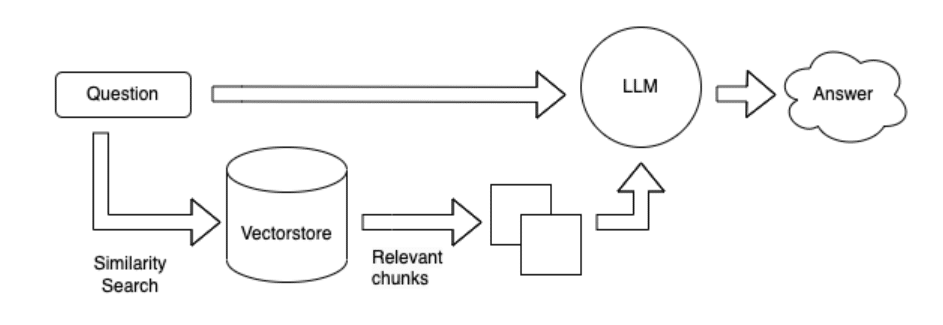
LangChain is a framework for developing applications powered by language models such as ChatGPT. It lets you call a language model, connect it to other data sources, and have it behave interactively according to the situation at hand.
Under the hood, it is built primarily from the following modules.
Models: Language models such as ChatGPT
Prompts: Management and optimization of prompts
Memory: Retention of previous exchanges
Indexes: Interfaces for loading, querying, and updating external data
Chains: Sequences of calls to LLMs and other components
Agents: Chains in which, given an instruction, the language model repeatedly executes actions and observes the results until the task is complete
Callbacks: Logging of the intermediate steps in a chain so that the application can be observed, debugged, and evaluated
As for practical applications, the official documentation lists a number of common use cases. Below we pick out those that seem applicable to architecture and civil engineering.
Personal assistants: Carry out instructions, remember how they were carried out, and build up knowledge from interactions with the user.
For example, LangChain could memorize the email exchanges between your staff and clients or partner companies, and gradually take over handling those client communications automatically.
Question answering: Answer questions about a specific document, using only the information contained in that document.
For example, ChatGPT could answer questions about a competitive tender based on the tender's call for bids.
Chatbots: Converse not only with ChatGPT but with other language models as well.
For example, you could converse with a language model trained on architecture and civil engineering terminology.
Code understanding: Use a language model to analyze code.
For example, you could feed in a program used for structural calculations and get explanations of it or have its errors identified.
Extraction: Pull structured information out of text.
For example, feed in a building's design documents and have the information automatically organized in Excel.
Summarization: Condense long documents.
For example, feed in the call for bids for a competitive tender and have it summarized or have the necessary information extracted.
Official documentation
LlamaIndex

https://gpt-index.readthedocs.io/en/latest/guides/primer/index_guide.html
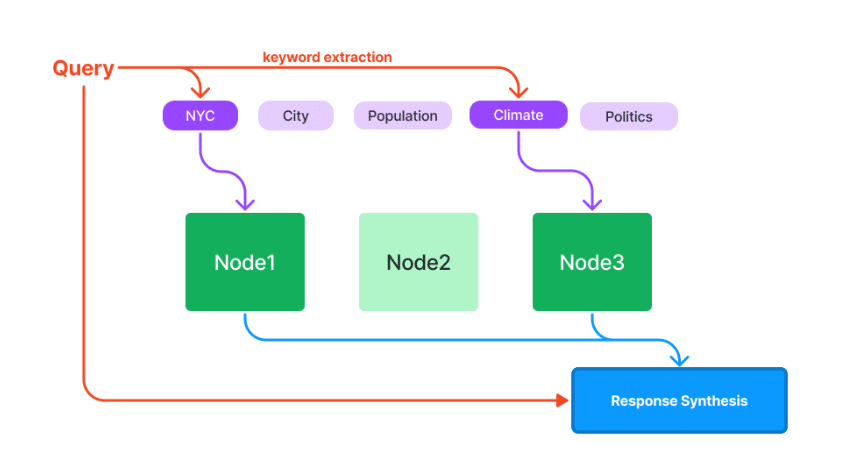
Large language models (LLMs) such as ChatGPT are pre-trained on vast amounts of publicly available data. As a result, they cannot draw on data they were not trained on, such as your company's internal data or the most recent information. LlamaIndex connects with such data, supplementing what the language model can reference.
Its features include the following.
Ingesting existing data (APIs, PDFs, docs, SQL, and so on)
Structuring data so it can be easily used by a language model
Advanced retrieval over your data
Integration with a variety of application frameworks (LangChain, Flask, Docker, ChatGPT, and others)
As for practical applications, the official documentation lists a number of common use cases. Below we pick out those that seem applicable to architecture and civil engineering.
Data referencing: The language model answers while consulting external data.
For example, ChatGPT could answer questions about on-site work while consulting your company's internal construction-method manuals.
Agents: Automate reasoning and decision-making—taking user input and deliberating internally within the system to return the correct result.
For example, you could prepare multiple internal documents, and when a question is put to ChatGPT, LlamaIndex would select the appropriate document to consult and produce an answer.
Chatbots: Build chatbots that supplement the knowledge of ChatGPT and similar models.
For example, users could ask questions about and gather information on the latest zoning regulations for each district.
Official documentation
Open-source software
Among the sophisticated software that has been made publicly available, we highlight AutoGPT and GoalGPT. Below, we outline each of these open-source projects and describe potential applications in architecture and civil engineering.
AutoGPT

https://news.agpt.co/
Auto-GPT uses GPT-4 to chain together the language model's "thoughts" and autonomously achieve the goals it has been set.
Its features include the following.
Internet access for searches and information gathering
Long-term and short-term memory management
GPT-4 instances for text generation
Access to popular websites and platforms
File storage and summarization with GPT-3.5
Extensibility via plugins
With AutoGPT you can tackle almost any task. It can be used in many ways—automating research, writing documents, building apps, and more. A few examples are given below.
Automatically find contractors located near a project site and request quotes from them
Develop applications
Build an algorithm that forecasts demand for each material
Gather information from the internet on the regulations and surrounding environment of a project site and organize it into a document
Automate communication with customers
Conduct market research and produce detailed reports
Automatically collect and distribute information related to competitive tenders
Similar tools include BabyAGI and GoalGPT, among others.
Official documentation
Plugins

Since May 2023, ChatGPT plugins have been available exclusively on paid plans. Of the many plugins out there, we introduce below those relevant to architecture and civil engineering, along with examples of how they could be applied.
Scraper
Extracts information from the web. For example, you could compile a price list for a particular manufacturer's materials.
Lexishopper
Searches Amazon products. For example, you could compile a list of building-material products in a specific category.
Wolfram
Performs calculations and creates charts. For example, you could create charts tracking and comparing land prices across different areas as a reference for real estate transactions.
Show Me
Creates diagrams. For example, you could produce flowcharts of the work sequence for each construction job.
VoxScript
Searches YouTube videos. For example, you could gather videos that could serve as references for construction methods on a particular job.
Manorlead
Searches US real estate. For example, you could pull up properties in a given area priced below a certain sale price.
World News
Answers questions about world news. For example, you could ask about movements in global stock prices.
Official documentation
Summary
In this article, we focused on extensions for generative AI (ChatGPT in particular)—libraries, open-source software, and plugins—giving a brief introduction to each and looking at applications in the architecture and civil engineering fields, including real estate and construction. Related services are likely to keep multiplying rapidly, so we plan to update this article as things develop. We hope you have found it useful.
If you are interested, please take a look at our other articles as well.
Finally, at mign we harness cutting-edge technology to continually create world-first solutions for the architecture and civil engineering fields, with the aim of realizing a more prosperous society. We are currently focusing our development on generative AI (ChatGPT and image generation), and we are able to develop solutions related to the topics covered above. If you are interested, please feel free to get in touch.
Contact form (website)
https://www.mign.io/contacts/new
Email
contact@mign.io
Press releases on our ChatGPT-related solutions specialized for architecture and civil engineering
https://prtimes.jp/main/html/rd/p/000000020.000100410.html
https://prtimes.jp/main/html/rd/p/000000023.000100410.html
Press releases on our image-generation AI solutions specialized for architecture and civil engineering
https://prtimes.jp/main/html/rd/p/000000013.000100410.html
https://prtimes.jp/main/html/rd/p/000000022.000100410.html
Other press releases
https://prtimes.jp/main/html/searchrlp/company_id/100410
The end
Read next ↓